Several shipping companies recruit engineering cadets and associate their sponsored candidates with specific maritime colleges. The following are some of the major sponsorship pathways to know about.
Maersk Sponsorship
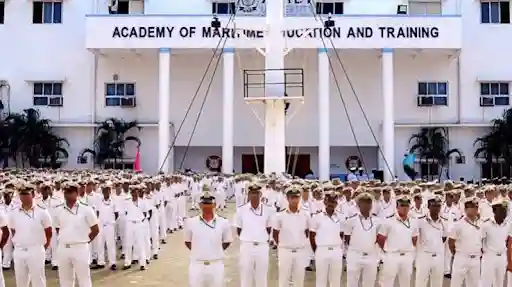
College: Academy of Maritime Education and Training (AMET), Chennai
Approx. course fees: ₹17.4 lakh
Maersk is a global shipping and logistics company with a major presence in the maritime industry. Its sponsorship-linked programs have provided students with a structured route from maritime education to a career at sea.
For B.Tech. Marine Engineering aspirants, AMET in Chennai is associated with Maersk-sponsored training. AMET’s marine engineering program is a four-year residential course. Its current academic information lists 60% aggregate in PCM, 50% in English, and a mandatory IMU-CET qualification for the undergraduate program. A passport is also required.
Eligibility
The general academic requirements include
- 10+2 or equivalent with physics, chemistry, and mathematics
- Minimum 60% aggregate in PCM
- Minimum 50% marks in English
- The candidate must meet the applicable age and medical standards
- Valid IMU-CET qualification
- Passport requirement for admission
The sponsorship selection can have additional company-specific requirements, so candidates should always check the current recruitment notice before applying.
Key Features
- Four-year B.Tech. Marine Engineering program
- Training at AMET, Chennai
- Maersk-linked sponsorship pathway
- Strong focus on marine engineering and practical training
- Opportunity to enter the professional marine engineering career path after completing the required training
MSC Sponsorship
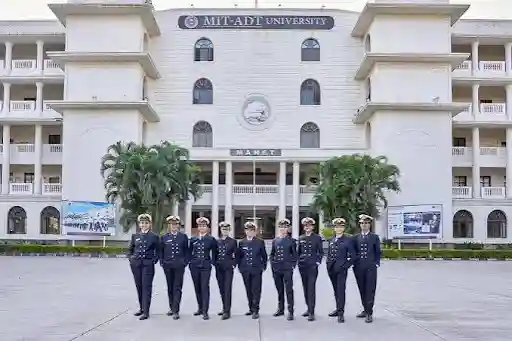
College: MANET, Pune, or Coimbatore Marine College (CMC)
MSC, or Mediterranean Shipping Company, is one of the major global container shipping companies. It also recruits marine engineering cadets through sponsorship programs.
For B.Tech. Marine Engineering candidates, MSC sponsorship has been associated with institutes including MANET, Pune, and CMC. JMDI’s maritime college information also lists MSC among the shipping companies associated with sponsored maritime training.
Eligibility
For the B.Tech. Marine Engineering program, the commonly applicable academic requirements include:
- 10+2 with Physics, Chemistry, and Mathematics
- 65% aggregate in PCM
- 50% in English in Class 10 or 12
- Valid IMU-CET qualification
- Age and medical fitness as required for marine programs
MANET’s current course information lists a four-year residential B.Tech. Marine Engineering program, with 60% PCM and 50% English requirements.
Key Features
- Sponsorship opportunity with MSC
- Training through established maritime institutes
- Residential B.Tech. Marine Engineering course
- Practical marine engineering training
- Exposure to the technical requirements of working onboard merchant ships
Executive Ship Management (ESM) Sponsorship
College: Samundra Institute of Maritime Studies (SIMS), Lonavala
Approx. course fees: ₹20.8 lakh
Executive Ship Management (ESM) has a particularly close connection with Samundra Institute of Maritime Studies (SIMS). SIMS was established as a maritime training institute associated with ESM and offers B.Tech. Marine Engineering under IMU and DG Shipping requirements.
For the 2026 B.Tech. Marine Engineering intake, the ESM-SIMS route has been listed with approximately ₹20.8 lakh in total fees.
Eligibility
Candidates generally need:
- 10+2 with PCM
- Minimum 60% PCM
- Minimum 50% in English
- Valid IMU-CET qualification
- Required medical fitness
- Age within the prescribed limit
The company may also conduct its own selection process, which can include an online test, interview, and other assessments.
Key Features
- Training at SIMS, Lonavala
- ESM-linked sponsorship
- Strong practical and simulator-based training
- Ship-in-Campus facilities
- Structured transition from academic training to shipboard training
- ESM has a long-standing connection with SIMS and its marine engineering cadets.
SIMS’ B.Tech. program includes practical marine engineering training, and its training model has historically included shipboard training before candidates proceed toward the required competency certification.
Fleet Management Sponsorship
College: International Maritime Institute (IMI), Greater Noida
Approx. course fees: ₹22.61 lakh
Fleet Management Limited recruits marine engineering candidates through its association with the International Maritime Institute (IMI), Greater Noida.
IMI offers a four-year residential B.Tech. Marine Engineering program approved by DG Shipping and AICTE, with the degree awarded by Indian Maritime University. The program covers marine machinery, propulsion, power generation, electrical systems, fuel and lubrication systems, water treatment, HVAC, and other shipboard engineering subjects.
Eligibility
Fleet’s 2026 B.Tech. Marine Engineering recruitment notice specifies additional sponsorship requirements, including:
- Age of 20 years or less at the time of admission
- Class 12 passed in the specified admission years
- Minimum 70% in PCM
- No more than two academic years’ gap between Class 10 and Class 12
- Candidates must clear the company’s selection process
The selection process includes an online multiple-choice test, interview, and psychometric test.
This is a good example of why students should not confuse college eligibility with company sponsorship eligibility. A company can set higher marks or age requirements than the basic B.Tech. admission criteria.
Key Features
- Training at IMI, Greater Noida
- Fleet management-linked career pathway
- Four-year residential B.Tech. Marine Engineering
- Simulator and workshop-based training
- Strong focus on ship machinery and practical engineering
- Opportunity to sail with Fleet Management after successful completion of the program and applicable requirements
Synergy Sponsorship
College: Coimbatore Marine College (CMC)
Approx. course fees: ₹18.205 lakh
Synergy Marine is another shipping company that recruits marine engineering candidates. CMC in Coimbatore is one of the institutes associated with the B.Tech. Marine Engineering pathway for Synergy-sponsored candidates.
CMC’s B.Tech. Marine Engineering program is a four-year course affiliated with Indian Maritime University and approved by DG Shipping. The course focuses on the operation, maintenance, and repair of ship machinery and systems.
Eligibility
The general B.Tech. Marine Engineering eligibility includes:
- 10+2 with Physics, Chemistry, Mathematics, and English
- Minimum 60% average in PCM
- Minimum 50% in English in Class 10 or 12
- Valid IMU-CET qualification
- Medical fitness according to applicable maritime standards
The sponsoring company can apply additional requirements during its selection process.
Key Features
- Training at Coimbatore Marine College
- Synergy-linked sponsorship opportunity
- Four-year residential B.Tech. program
- Ship-in-Campus training
- Full-mission engine room simulator exposure
- Practical workshops and marine machinery training
- Faculty and training facilities focused on preparing students for onboard engineering work
Keeping track of B.Tech. Marine Engineering sponsorship forms can be difficult because different companies release forms, eligibility conditions, and selection schedules at different times.
The Merchant Navy Decoded app can be useful for keeping your preparation and application information in one place. It includes tools and resources such as
- Latest form tracking—keep an eye on new sponsorship and admission forms.
- Best college information—compare and explore B.Tech. Marine Engineering colleges.
- Test series – practice questions and improve your preparation for entrance and sponsorship exams.
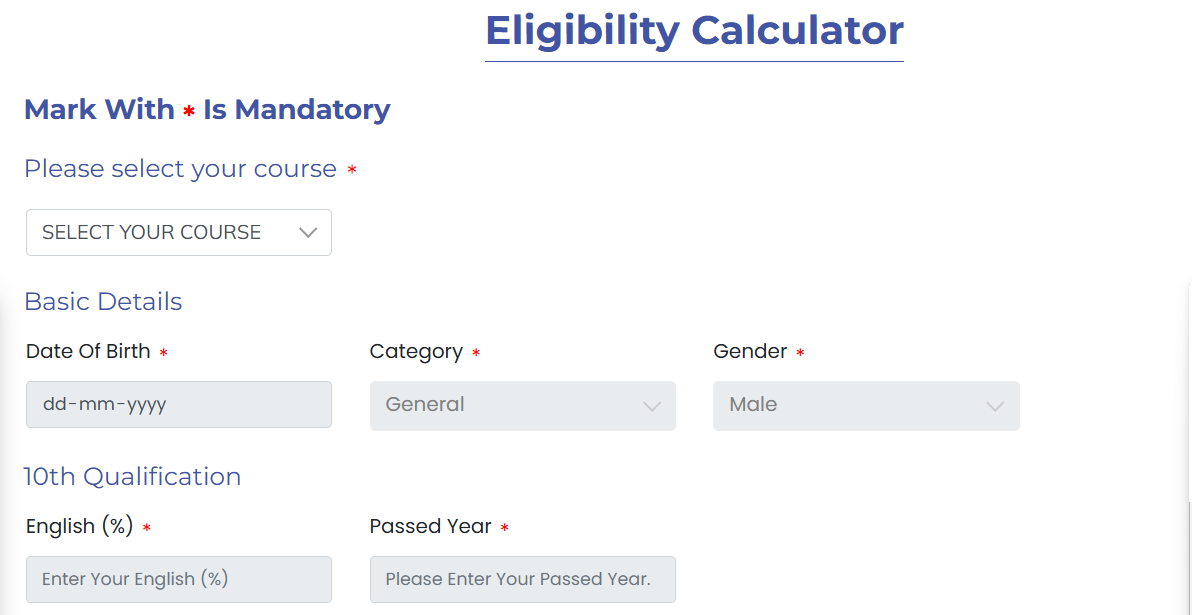
- Eligibility calculator—check which marine engineering colleges and courses you may be eligible for.
- Crack IMUCET book – use structured preparation material for IMUCET.
Merchant Navy Decoded also provides dedicated IMUCET and sponsorship preparation resources for marine engineering aspirants.
