DNS Career Path
A Diploma in Nautical Science (DNS) is not just a one-year program that instantly qualifies you to be a deck officer. Rather, it marks the start of a well-planned maritime career that brings together the elements of education, shipboard practical training, sea service, proficiency testing, and ongoing professional development.
For those wishing to eventually work as a ship’s captain, the career path generally starts as a deck cadet and may include jobs as a third officer, second officer, chief officer, and eventually master (captain) after completing the necessary training, sea service, and proficiency evaluations. Here we will discuss the DNS career path in India and what happens after the sea training, how officers advance in rank, and how to become a master.
What Is DNS?
DNS refers to the Diploma in Nautical Science. This is a pre-sea program designed for individuals willing to pursue a career on the deck in the merchant navy. The program provides candidates with knowledge of navigation, ship safety, seamanship, cargo operations, etc. The current IMU states DNS is a one-year program. If students succeed in their training, they will be able to take the examinations and get the certification necessary to obtain their Deck Officer Certificate of Competency.
It must be noted that DNS completion does not mean that the candidate can work as a ship captain, but that is only the beginning of their professional career.
What Happens After Completing DNS?
Once the candidate finishes the necessary pre-sea education, he or she begins the practical aspect of the profession.
The career path for the Indian DNS route is as follows:
DNS Pre-Sea Training → Deck Cadet → Necessary Sea Experience → Competency Training & Examination → Officer Level → Chief Officer → Master/Captain
During the on-board training period, the students get their first experience of applying what they learned during the pre-sea studies in real operations on board. As a deck cadet, one carries out the assigned duties under the direction of skilled officers while getting valuable experience in navigation, watchkeeping, safety, seamanship, cargo operations, and documentation.
The precise requirements for transitioning from one level to another are determined by the applicable Directorate General of Shipping (DGS) regulations and require training plus an appropriate Certificate of Competency.
DNS Career Path at a Glance
Career Stage | Typical Position | Main Requirement for Progression |
Pre-sea | DNS Student/Cadet | Complete approved DNS training |
Onboard training | Deck Cadet | Complete required structured sea training/service. |
Officer entry | Third Officer / OOW | Complete required training, examinations, and CoC requirements. |
Officer | Second Officer | Further sea service and applicable certification |
Senior officer | Chief Officer / Chief Mate | Required sea service, training, and CoC |
Command | Master / Captain | Required sea service, training, examinations, and Master CoC |
This table is a career map rather than a fixed timetable. The time taken can vary depending on the candidate’s training pathway, sea service, examinations, company requirements, and other applicable regulations.
Stage 1: Deck Cadet
For most DNS students following the deck-officer route, the first major practical stage is working onboard as a deck cadet. This is where the transition from student to trainee seafarer really begins.
A deck cadet works under the supervision of experienced officers and gradually becomes familiar with the daily operation of a vessel.
Typical areas of training include:
- Bridge watchkeeping
- Navigation
- Seamanship
- Cargo operations
- Safety procedures
- Emergency drills
- Shipboard communication
- Maintenance activities
- Maritime documentation
- Use of navigational equipment
The aim of cadetship is not simply to complete a period at sea. The candidate must gain the required practical experience and complete the applicable training record and assessments. Maersk’s official seafarer information similarly describes its Deck Cadet program as combining training at sea with maritime-academy education. Its cadets receive guidance from designated and senior officers and gain exposure to vessel operations.
Stage 2: Becoming a Qualified Deck Officer
After completing the required sea service and other prescribed training, the candidate can progress towards the competency examinations required for officer certification. The Indian DNS pathway published by IMU shows the progression from the pre-sea stage through sea service, post-sea training, and the Second Mate (Foreign Going) Certificate of Competency. The Certificate of Competency is important because it is the professional certification that allows a qualified seafarer to serve in the relevant officer capacity.
This is an important distinction:
DNS qualification ≠ automatic officer license.
The candidate must complete the prescribed training, sea service, examinations, and certification requirements.
Table of Contents
Stage 3: Third Officer
Once the candidate has completed the applicable requirements and obtained the necessary competency certification, they can enter the officer ranks. The third officer is generally an officer responsible for duties associated with navigation, safety, and other deck-department operations assigned by the vessel’s management.
At this stage, the candidate is no longer simply learning how a ship operates. They are now working as part of the professional deck-officer team. The experience gained here becomes important for progressing towards higher officer ranks.
Stage 4: Second Officer
With further sea service and the required qualifications, an officer can progress to the position of second officer. The second officer commonly has significant responsibilities related to navigation and bridge watchkeeping. The exact division of duties depends on the vessel, company, and operational requirements.
Navigation is a major part of the role, so officers at this stage need strong technical knowledge and a disciplined approach to bridge operations. Career growth at this level is not simply about completing a certain number of months at sea. Officers must continue meeting the applicable competency, training, and examination requirements.
Stage 5: Chief Officer
The next major step is chief officer, also known as chief mate. This is a senior deck-officer position with considerably greater responsibility.
The chief officer is involved in areas such as
- Cargo operations
- Deck department management
- Safety responsibilities
- Crew supervision
- Maintenance and operational planning
- Supporting the master in vessel operations
At this stage, leadership becomes increasingly important. A chief officer has to combine nautical knowledge with the ability to manage people, operations, and safety responsibilities onboard. Under the applicable DGS certification framework, progression to Chief Mate requires the relevant Second Mate/Officer of the Watch qualification, prescribed sea service, and approved education, training, examination, and assessment.

Stage 6: Master or Captain
The final stage of the traditional deck-officer career path is master, commonly called the captain. The master is responsible for the overall command of the vessel.
As a result, the position is unlike any of the earlier ranks of officers. The master is responsible for operating the entire ship efficiently and safely while managing the crew, the navigation, and the necessary services involving the cargo, including communication with the owners and the relevant authorities.
In accordance with the DGS certification framework, those who have achieved a Master Certificate of Competency must hold the necessary qualification of Chief Mate, as well as complete the requisite sea service, approved training, and examinations.
Hence, it can be said that the master’s position is attained through experience, training, and examinations in the course, in which the candidate accumulates responsibility and professional expertise rather than just graduating from the DNS course.

How Long Does It Take to Become a Captain?
There is no single fixed number of years that applies to every DNS candidate.
The time depends on factors such as
- Completion of pre-sea training
- Availability and completion of onboard training
- Required sea service
- Passing competency examinations
- Completion of mandatory courses
- Obtaining the required Certificates of Competency
- Company promotion policies
- Individual performance and career progression
The IMU-published DNS career pathway provides a structured example involving the one-year pre-sea stage, a minimum period of sea service, post-sea training, and subsequent sea service and competency stages before reaching master. The DGS certification framework also specifies minimum sea-service requirements for higher certificates.
So rather than promising that someone will become a captain in a particular number of years, candidates should view the progression as a step-by-step professional pathway.
Skills Needed for Career Growth
Good academic performance is important at the beginning, but a successful deck-officer career requires much more.
Navigation Skills
Officers need a strong understanding of navigation, bridge procedures, and navigational equipment.
Communication
The English language is essential for work on board vessels, as sailors work together from many nations.
Safety Awareness
Safety is a primary concern at work on board vessels.
Leadership
The higher the rank of an officer, the more important leadership and decision-making are in their work.
Technical Knowledge
Maritime technology and regulations keep on developing, and officers have to be able to learn throughout their lives.
Discipline and Responsibility
Work and life at sea require following procedures and professional codes of conduct.
Teamwork
Ship’s work can only be organized when all the departments, such as the deck department, engine department, etc., work together.
Can DNS Officers Work Ashore?
Yes. A DNS qualification is primarily associated with the deck-officer pathway, but a maritime career does not necessarily have to remain entirely onboard. After gaining appropriate experience and qualifications, maritime professionals can explore shore-based roles depending on their experience, additional qualifications, and employer requirements.
Possible areas include:
- Ship operations
- Marine surveying
- Port and terminal operations
- Marine safety
- Ship management
- Maritime training
- Marine consultancy
- Shipping-company operations
However, shore-based opportunities are not an automatic outcome of completing DNS. They generally become more relevant after gaining suitable professional experience and qualifications.
How JMDI Academy Can Help
The DNS journey does not end with admission. Candidates need to prepare for IMU-CET, sponsorship processes, interviews, and the academic demands of maritime training.
JMDI Academy currently provides IMU-CET and sponsorship preparation covering areas such as
- Physics
- Chemistry
- Mathematics
- English
- Aptitude
- General Science
- Regular tests and mock tests
- Mentorship
- Technical grooming
- Interview preparation
- Communication skills
- Resume guidance
- Sponsorship assistance
For students planning to enter the DNS route, structured preparation can help them build the academic and communication skills required during the early stages of their maritime career. Preparation, however, does not guarantee admission, sponsorship, or promotion. Those outcomes depend on the applicable institute, company, regulatory requirements, and the candidate’s own performance.
Merchant Navy Decoded App for Career Guidance
Students can also use Merchant Navy Decoded App as a supporting resource while planning their maritime career.
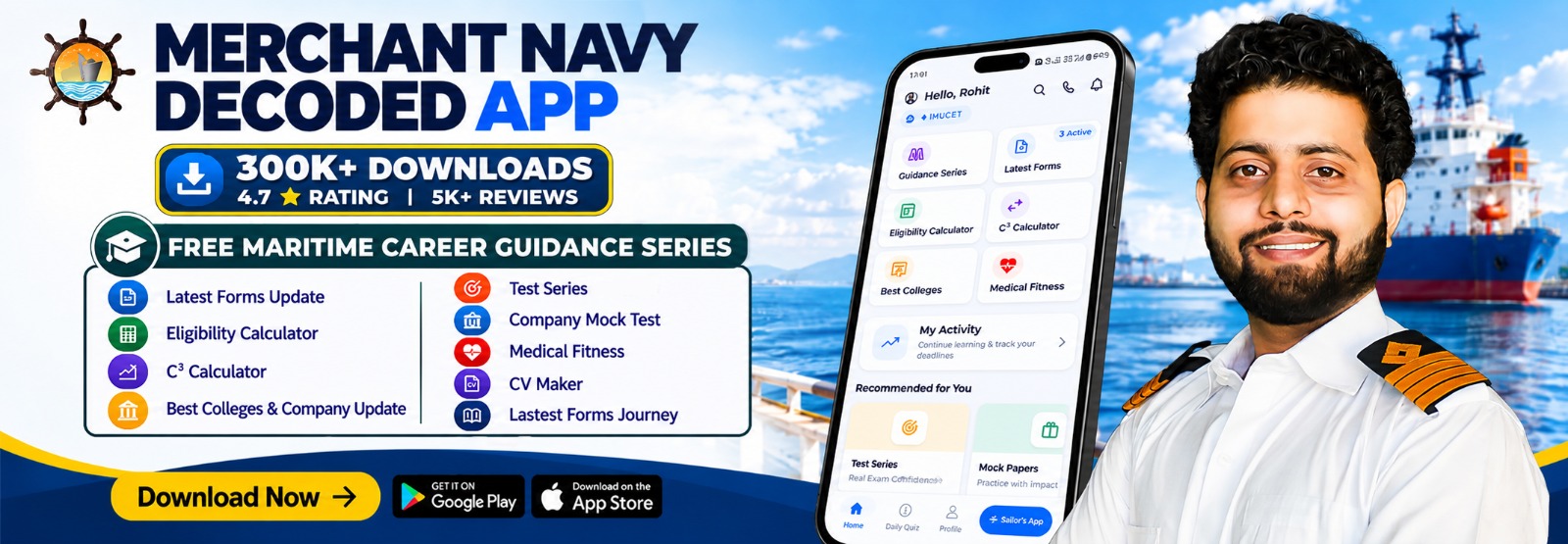
The platform provides resources related to:
- IMU-CET preparation
- DNS and maritime-course guidance
- Eligibility checking
- Sponsorship guidance
- Mock tests
- Medical guidance
- Maritime career information
- Free learning resources
Its eligibility tools can help candidates understand important admission parameters, while its IMU-CET resources (Crack IMU-CET) and sponsorship guidance can be used alongside official IMU, DGS, and company information.
Candidates should always verify admission, medical, sponsorship, and certification requirements from the relevant official source before making important decisions or payments.

FAQ’s (Frequently asked Questions)
A common deck-officer pathway is
DNS → Deck Cadet → Third Officer → Second Officer → Chief Officer → Master/Captain
Progression is subject to the required sea service, training, examinations, and Certificates of Competency.
No. A deck cadet is a trainee who is gaining practical shipboard experience under the supervision of qualified officers.
Yes, DNS can be the starting point for the deck-officer career pathway leading towards master/captain. However, DNS alone is not sufficient. The candidate must complete the required sea service, training, examinations, and competency certification.
The applicable requirement depends on the training and certification pathway. The IMU DNS career pathway specifies minimum sea-service stages, while DGS certification rules prescribe sea-service requirements for the relevant Certificates of Competency.
For the traditional deck-officer pathway, master/captain is the highest shipboard rank.
The chief officer/chief mate is a senior deck officer involved in areas such as cargo operations, deck-department management, safety, and supporting the master.
No. Candidates must complete the prescribed sea service, training, examinations, and competency-certification requirements before progressing into the relevant officer role.
No. DNS provides a pathway into the deck-officer profession, but progression depends on completing the required stages and meeting the applicable regulatory, examination, sea-service, and company requirements.
Candidates should rely primarily on Indian Maritime University (IMU) and the Directorate General of Shipping (DGS) for education, certification, and regulatory requirements. Company-specific promotion and employment conditions should be checked with the respective shipping company.