Chitkara University BSc Nautical Science Fees

Chitkara University BSc Nautical Science Fees

If you are planning to join the Merchant Navy, you may find Chitkara University when searching for institutes for the BSc in Nautical Science course. The university has a School of Maritime Studies offering a 3-year BSc in Nautical Science.

One of the first questions students want to know is usually the total cost of the course. The total cost of the three-year B.Sc. Nautical Science course at Chitkara University for the academic year 2026 is Rs.11.10 lakh. This includes the residential course fee, Educational Technology Services (ETS), Career Advancement Services (CAS), and the first miscellaneous charges.

The fee is paid per semester, not all at once. Hence, it is important to see the breakup semester-wise before opting for the course.

Chitkara University BSc Nautical Science Fees 2026

According to Chitkara University’s 2026 fee structure, the B.Sc. Nautical Science program has the following charges:

Semester

Residential Course Fee

ETS/CAS

Miscellaneous Charges

Total

Semester I

₹1,55,000

₹25,000

₹50,000

₹2,30,000

Semester II

₹1,55,000

₹25,000

—

₹1,80,000

Semester III

₹1,75,000

—

—

₹1,75,000

Semester IV

₹1,75,000

—

—

₹1,75,000

Semester V

₹1,75,000

—

—

₹1,75,000

Semester VI

₹1,75,000

—

—

₹1,75,000

This brings the total listed program cost to ₹11,10,000 for three years. The first semester is the costliest, as it has additional miscellaneous charges of Rs.50,000 apart from the residential fee and ETS. The second semester includes the CAS fee and the residential course fee.

Chitkara also adds that the fee is subject to change, and students applying for the next academic year should check the latest fee structure before remittance.

What Is Included in the Chitkara BSc Nautical Science Fee?

The residential course fee is not simply a tuition charge. Chitkara’s School of Maritime Studies describes its residential setup as including several student facilities.

The university’s FAQ mentions that the residential charges cover items such as:

  • Academic and practical training
  • Hostel accommodation
  • Food
  • Books
  • Uniforms
  • Linen
  • Laundry facilities
  • Sports facilities
  • Access to swimming facilities
  • Indoor gymnasium facilities
  • Medical support arrangements

Facilities and inclusions may vary, and students should check what is included in their year of admission. The 2026 fee document also specifically mentions the availability of air-cooled accommodation for B.Sc. Nautical Science students.

It is worth considering this while comparing the fee of Chitkara with some other maritime colleges. A simple comparison of tuition fees can be misleading if one institute includes residential and other student-related expenses and the other lists them separately.

What Are ETS and CAS Charges?

Two additional charges appear in Chitkara University’s fee structure: Educational Technology Services (ETS) and Career Advancement Services (CAS).

For the 2026 intake:

  • ETS: ₹25,000 with the first-semester fee
  • CAS: ₹25,000 with the second-semester fee

Therefore, a total of ₹50,000 is charged under these two heads during the first year. Students should include these charges when calculating the actual amount they need for admission rather than looking only at the residential course fee.

Chitkara BSc Nautical Science Course Duration

The B.Sc. Nautical Science course is a three-year course consisting of six semesters. This course is for students who want to join the Merchant Navy and go on deck. The subjects covered include navigation, ship operations, safety, cargo operations, seamanship, maritime law, and other subjects required to work on a commercial ship.

Chitkara’s program also offers a 12-month onboard internship after the academic phase. This seagoing training is an important part of the route to becoming a qualified deck officer. After meeting the academic and onboard training requirements, students can progress along the deck officer career path.

What Do You Study in BSc Nautical Science?

B.Sc. Nautical Science is not just about learning how to navigate a ship. Students study a combination of theoretical subjects and practical maritime skills. Some of the important areas include

  • Navigation
  • Seamanship
  • Marine communication
  • Ship stability
  • Cargo handling and stowage
  • Meteorology
  • Marine engineering basics
  • Bridge equipment
  • Watchkeeping
  • Maritime law
  • Ship operations
  • Safety and emergency procedures
  • Marine environmental protection

The course develops from general to specific topics related to the operation of bridges and management of ships. This is useful for students who want to work in the deck department instead of the engine department.

Track Merchant Navy Admissions with Merchant Navy Decoded

Merchant Navy admissions can become confusing because different colleges and shipping companies open forms at different times. The Merchant Navy Decoded app can help students keep track of the admission process in one place. It includes useful tools and resources such as
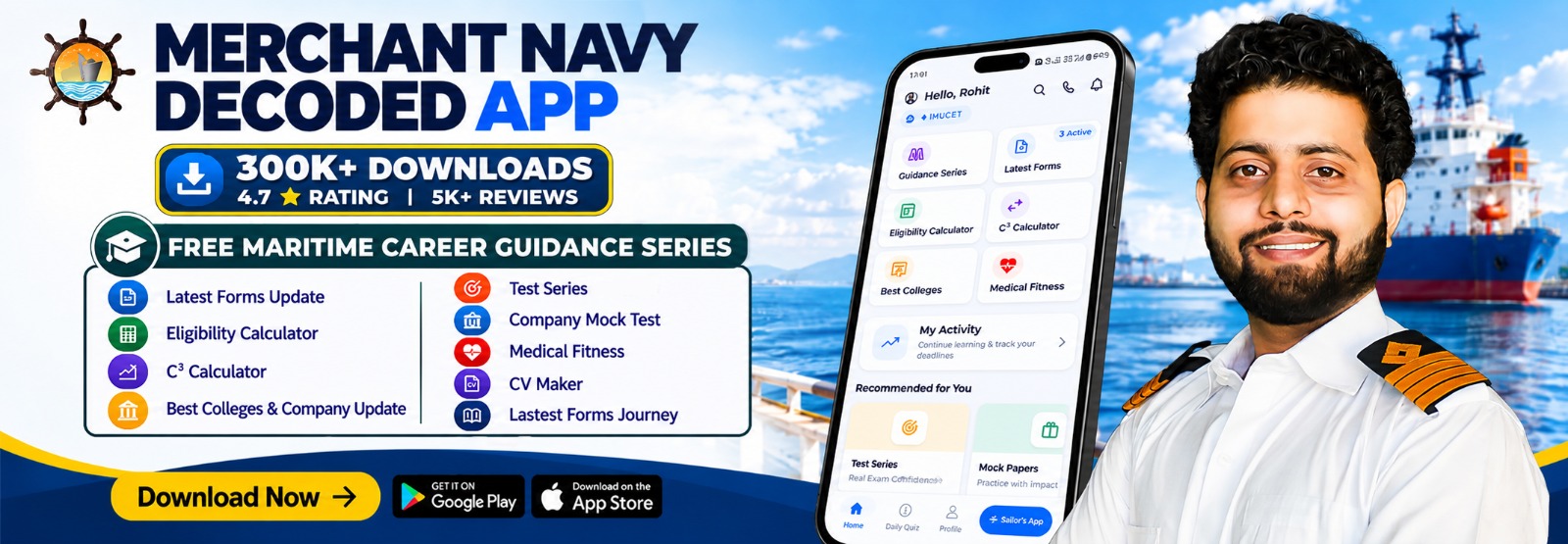
Merchant Navy Decoded App

  • Test series for entrance and preparation
  • Latest form tracking so you can keep an eye on new Merchant Navy applications
  • College and course information for different Merchant Navy pathways
  • The Crack IMUCET book is another useful preparation resource for students targeting IMU-CET. It can help you practice important concepts and questions and strengthen your preparation with focused revision.

Table of Contents

Chitkara University BSc Nautical Science Eligibility

The basic academic requirements listed by Chitkara include:

  • Passed Class 12 with physics, chemistry, mathematics, and English as separate subjects.
  • Minimum 60% aggregate in PCM.
  • Minimum 50% in English in either Class 10 or Class 12.
  • Must meet the medical fitness requirements prescribed by the Directorate General of Shipping.
  • Must meet the required eyesight standards.
  • Candidates should not have color blindness.
  • IMU-CET qualification is required.
  • A passport is required for INDoS-related requirements.
  • Candidates may also have to go through the institute’s selection process, including a personal interview.

The 2026 Chitkara fee document states an age limit of 23 years, but the current course webpage on the university’s website states 25 years. As the official pages of Chitkara mention different age limits, candidates are advised to cross-check the age limit for their respective admission cycle with the university before applying.

Medical eligibility has a special significance in a nautical science course. Having met the academic requirements does not mean you are automatically eligible for a seagoing career.

Medical Requirements for BSc Nautical Science

Students joining the Merchant Navy need to meet the medical standards prescribed for seafarers.

Chitkara lists requirements related to:

  • Medical fitness according to DGS norms
  • Required eyesight
  • Normal color vision
  • Physical fitness for sea service

The 2026 fee structure requires unaided 6/6 vision in both eyes and no color blindness. Medical requirements can be strict, so it is a good idea to understand them before you pay admission or counseling fees. The medical examination by a doctor approved by the Directorate General of Shipping is an important stage for students aspiring for a career at sea.

Admission Process for BSc Nautical Science at Chitkara

Admission to a maritime course involves more than simply completing a college application.

For B.Sc. Nautical Science, students should generally be prepared for the following stages:

1. Check Academic Eligibility

First, check your Class 12 PCM and English marks against the current requirements.

  • Another useful feature is the eligibility calculator. Instead of manually trying to work out whether your marks meet the requirements of a particular Merchant Navy course, you can use the calculator to check your eligibility based on your academic details.
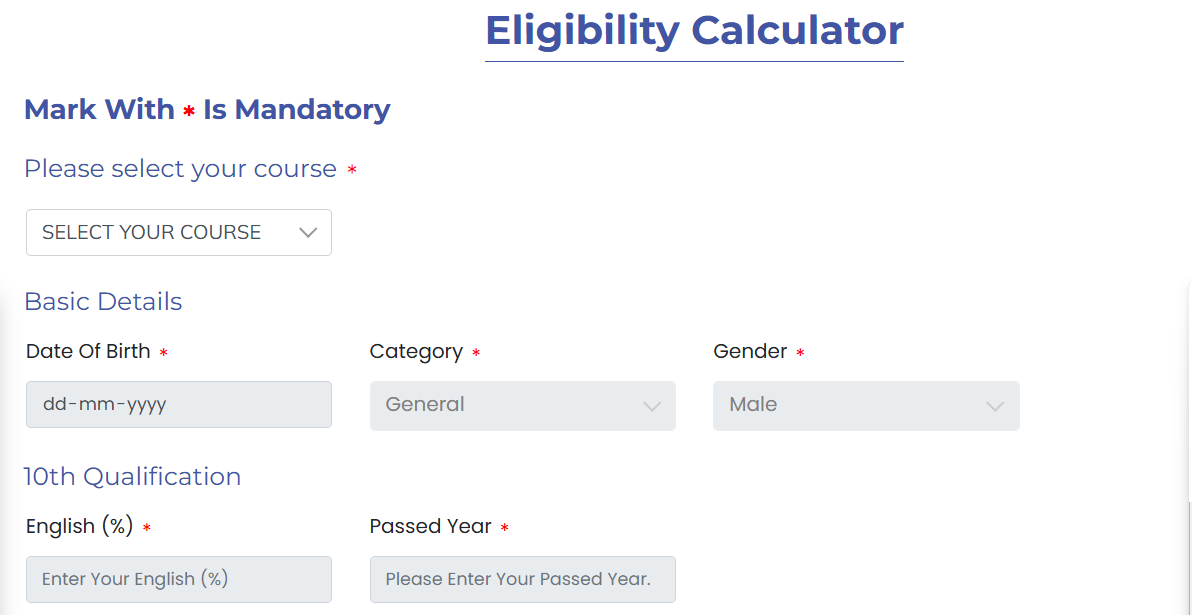
Eligibility calculator

2. Appear for IMU-CET

IMU-CET is an important entrance examination for maritime programs. Chitkara lists the IMU-CET qualification among the requirements for its B.Sc. Nautical Science program.

Students should therefore start preparing for the entrance examination well before the admission period.

3. Complete the Institute’s Selection Process

Depending on the admission cycle, Chitkara may have additional selection requirements such as an interview.

4. Complete the Medical Examination

Candidates must meet the medical standards applicable to seafarers.

5. Complete Admission Formalities

After selection, students can start the residential program and complete the necessary paperwork and fee payment. The rules relating to admission may vary from one academic year to the next and candidates are therefore advised to refer to the current notice of admission before making an application.

Is Chitkara BSc Nautical Science a residential course?

Yes. The 2026 fee structure refers to the charge as a residential course fee. Maritime education involves a lot of residential training because the students are not just learning academic subjects. They also need to develop discipline, teamwork, communication, physical fitness, and an understanding of a structured maritime environment.

Chitkara maritime facilities include hostel accommodation, food, laundry, sports facilities, swimming facilities, and other student amenities. Students going to college should consider the total cost of residential fees, not just the tuition part.

Chitkara BSc Nautical Science: Fee Breakdown at a Glance

For someone looking for the numbers quickly, the 2026 fee structure can be summarized like this:

Total three-year fee: ₹11.10 lakh

First semester: ₹2.30 lakh

This includes:

  • ₹1.55 lakh residential course fee
  • ₹25,000 ETS
  • ₹50,000 miscellaneous charges

Second semester: ₹1.80 lakh

This includes:

  • ₹1.55 lakh residential course fee
  • ₹25,000 CAS

Third to sixth semester: ₹1.75 lakh per semester

The fee structure therefore becomes relatively straightforward after the first year. Keep in mind that this is the published 2026 fee structure, and fees may be revised for future batches.

What Happens After BSc in Nautical Science?

B.Sc. Nautical Science is designed for the deck side of the Merchant Navy. operations. After completing the required training and sea-time requirements, a student can progress through the deck officer hierarchy.

The usual career path starts with the role of deck cadet and can progress to positions such as

Deck Cadet → Third Officer → Second Officer → Chief Officer → Master/Captain

The actual timeline depends on variables like how much sea time is required, exams, certifications, the company, and how fast you move up in your career. The work consists of navigation, watchkeeping, cargo operations, safety procedures, ship operations, and other duties of the deck department.

Prepare for IMU-CET and Merchant Navy Interviews with JMDI Academy

Students who want structured preparation can also consider JMDI Academy. JMDI Academy is dedicated to IMU-CET, sponsorship preparation, interviews, and overall preparation for Merchant Navy aspirants. This routine helps students who find it difficult to be consistent when they study on their own.

The preparation for B.Sc. Nautical Science and other courses of the Merchant Navy for students should not just end with the entrance examination. Academic eligibility, medical fitness, interviews and documentation, admission timelines … they’re all important.

FAQ’s (Frequently asked Questions)

Chitkara’s School of Maritime Studies offers a B.Sc. Nautical Science course approved by the Directorate General of Shipping, Government of India.

Yes. The fee structure is residential course-based. The university provides facilities related to the hostel as part of its maritime residential setup.

No. Physics and Nautical Science eligibility criteria listed by Chitkara: Required Subjects: Physics, Chemistry, and Mathematics.

Yes. The course is designed for the deck side of the Merchant Navy, and the students are taught navigation, seamanship, cargo operations, safety, and bridge watchkeeping.

As per the current course information of Chitkara, IMU-CET qualification is one of the eligibility criteria for admission.

The program, the university says, involves a 12-month internship on board a merchant navy ship, an important part of the training pathway.

Yes. The 2026 fee document of the university clearly mentions that fees may be revised. So, students are advised to check the latest fee structure before admission.