AMET DNS Sponsorship

If you are looking at a career in the merchant navy, you have most likely heard the term “AMET DNS sponsorship.” This term joins three parts of the Indian maritime education system: AMET University, the Diploma in Nautical Science (DNS), and the shipping-company sponsorship model that pays for and speeds up cadet training. This guide explains each of these parts, shows how the sponsorship process works, and tells candidates what they must know before they apply.
What Is AMET University?
The Academy of Maritime Education and Training, which people call AMET University, is a university located in Chennai, Tamil Nadu, India. AMET University was one of the places in the country that focuses only on teaching and studying maritime subjects. AMET University has earned a reputation because of its close connections with the shipping industry. The International Association of Maritime Universities, which is based in Tokyo, has given AMET University recognition. According to the evaluation rules of that association, AMET University has frequently been listed as one of the maritime schools around the globe.
AMET University works on its own. It is not officially linked to the Indian Maritime University, known as IMU. Still, anyone who wants to build a career in the sea at AMET University must pass the Indian Maritime University Common Entrance Test, or IMU‑CET. This test is required by rules in the shipping sector for entry into most well‑known pre‑sea training programs in India.
What Does DNS Mean?
DNS stands for Diploma in Nautical Science. This is a sea training program that helps students get ready to work as deck officers in the merchant navy. In India there are two ways to start a career in nautical science. One is the DNS course. The other is a three-year B.Sc. In Nautical Science.
The DNS course is shorter. It is often picked by students who want to begin their sea career. The B.Sc. route is preferred by those who want an undergraduate degree along with their nautical training.
Both of these paths lead to results. After finishing the shore-based training, cadets go on to gain sea time on ships. Then they take competency exams organized by the Directorate General of Shipping, or DGS. After passing these exams, they move up through the ranks of deck officers.
What Is a Sponsorship in This Context?
In the Indian merchant navy training system, sponsorship means an agreement between a shipping company and a maritime training institute. Instead of paying all fees and then looking alone for a ship placement, a cadet who is part of a sponsorship is chosen by a shipping company before training starts. The shipping company promises to put the cadet on its ships for the sea‑time training. Often the shipping company also lowers the fees, secures training spots on board, and makes the route a job after the cadet finishes.
Sponsorship is good for both sides. Shipping companies gain access to promising candidates and can train them to match their own standards from the very beginning. Cadets, on the other hand, do not face the difficulty of finding sea‑time placement alone, which can otherwise block a maritime career.
Sponsorship is not a rule for becoming a merchant navy officer, but most people say it is a good idea. Cadets who are part of sponsorship usually get guaranteed sea time. Have many fewer problems finding a shipboard spot than cadets who train without a shipping company’s help.
AMET's Sponsorship Partners
AMET has built long‑standing relationships with two names in global shipping: V.Ships.
I have seen how AMET and Maersk have maintained a relationship for more than twenty years. Maersk, one of the respected names in global container shipping, offers sponsored seats for the B.Sc. Nautical and B.Tech. Marine Engineering programs at AMET. The sponsorship program from Maersk is highly preferred because of Maersk’s scale, its modern fleet of container vessels, and its structured, globally recognized training pipeline.
AMET and V. Ships have had an academic partnership for more than ten years. V.Ships is a well‑known international ship management company, and AMET has taken a step by establishing a dedicated V.Ships Maritime Knowledge Centre under the AMET Institute of Science and Technology at its Thenpattinam campus. This center reflects the depth of the collaboration between AMET and V.Ships. Gives sponsored cadets access to specialized facilities and training resources.
Beyond AMET’s partnerships, the wider Indian merchant navy sponsorship landscape contains other well‑known companies such as Anglo‑Eastern, Great Eastern Shipping, Fleet Management, Synergy Marine Group, MSC (Mediterranean Shipping Company), the Shipping Corporation of India TORM Tankers, and the Wallem Group. Many of these companies run their sponsorship exams independently of AMET, so candidates researching options should check each company’s specific application windows and institute affiliations because these change from year to year.
Eligibility Criteria
While each sponsoring company sets its specific requirements, most AMET‑linked sponsorship programs, such as the Maersk track and the V.Ships track, follow a broadly similar eligibility framework:
- Academic qualification: Candidates must have passed the 10+2 (higher secondary) examination with physics, chemistry, and mathematics as core subjects.
- Minimum marks: Most programs expect an aggregate of sixty percent or higher in PCM. Competitive companies may set the bar at seventy percent or above. English marks typically need to be in the range of fifty to seventy percent depending on the sponsoring company.
- Age limit: Candidates generally need to fall within an age range of seventeen and a half to twenty‑five years at the time of application, though the exact cutoff varies by company.
- Documentation: An Indian passport or the ability to obtain one promptly is typically required, along with identity and educational documents.
- Medical fitness: All candidates must be medically fit according to the standards set by the Directorate General of Shipping. This is verified later in the selection process through a medical examination at a company‑approved medical center.
- IMU‑CET qualification: Regardless of the sponsoring company, candidates must qualify for the Indian Maritime University Common Entrance Test since this exam is a prerequisite for admission to most recognized nautical and marine engineering programs in India.
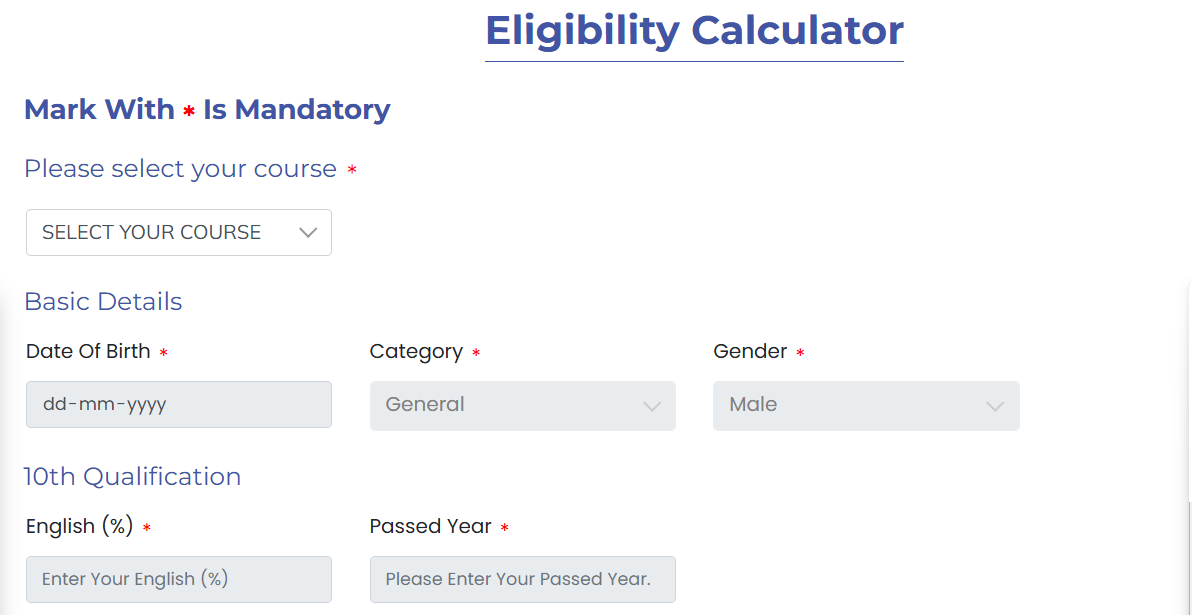
Want to check whether you meet the DNS eligibility requirements? You can use the Merchant Navy Decoded Eligibility Calculator to enter your academic and basic details and get an eligibility check for relevant maritime courses.
Table of Contents
The Application and Selection Process
The exact sequence can differ slightly between sponsoring companies, but the AMET sponsorship process generally follows this pattern:
- Online application. Candidates fill out an application form that’s usually available on the AMET University website or a dedicated admissions portal during a set application period that usually opens before the August intake each year.
- IMU-CET. Candidates must. Pass the Indian Maritime University Common Entrance Test, which is held online in several phases.
- Shortlisting. Based on grades, IMU-CET scores, and each company’s own standards, candidates are chosen for the round.
- Personal interview. Shortlisted candidates attend a face‑to‑face or panel interview. Some programs hold these interviews in cities like Chennai, Delhi, Mumbai, and Kochi.
- Psychometric test. Many sponsoring companies add a test to check a candidate’s skill, mood, and fit for life at sea.
- Medical screening. Candidates who pass the interview and psychometric test are sent to a list of company‑approved centers for a full medical check following the rules of the Directorate General of Shipping.
- Final confirmation. Candidates who clear the check and psychometric test get an official offer by email. To secure the seat, selected candidates must pay their first‑term fees during the given time window.
Because this process involves several sequential stages, it can take a few months from the initial application to final confirmation, so candidates are generally advised to apply as early as possible within each admission cycle.
Why Sponsorship Matters for a Merchant Navy Career
Sponsorship gives the practical advantage: it guarantees sea time. In the merchant navy training pathway cadets must finish a required period of sea service on a ship before they can take competency exams and climb the officer ladder. Without a company sponsorship, finding a sea‑time placement on your own can take time and is uncertain. It can sometimes delay a cadet’s progress for months or even years.
Sponsorship with an established name such as Maersk or V. Ships also gives long‑term career value. Cadets trained inside a company’s fleet become familiar with that company’s ships, systems, and way of working. This familiarity often makes it easier to move into a full‑time role after they qualify. Sponsorship can also open doors to a career path inside a company that already knows the candidate’s training history and performance record.
JMDI Academy for Sponsorship Preparation
JMDI Academy, Dehradun, provides preparation support for students targeting Merchant Navy entrance examinations and company sponsorships.
For aspirants, preparation can include PCM, English, aptitude, mock tests, communication, and interview practice.
Preparing for sponsorship and IMU-CET together can help students avoid treating the two processes as completely separate examinations.
Students preparing for DNS Sponsorship can also explore JMDI Academy’s preparation resources, including its IMU-CET book and test series, to strengthen their exam preparation through regular practice, MCQs, sample papers, and mock tests. Along with preparation resources, Apply now with JMDI Academy to begin your preparation with the right guidance and study resources.

Merchant Navy Decoded App for AMET Aspirants
The Merchant Navy Decoded App is another useful resource for students preparing for the Merchant Navy admission pathway. The app provides Merchant Navy-related information and preparation resources, including an IMU-CET test series. Regular mock-test practice can help students improve speed and identify weak areas before the examination.
Students can combine this with sponsorship-focused preparation and interview practice for a more complete preparation strategy.


Final Thoughts
AMET DNS. The related B.Sc. Nautical Science and marine engineering sponsorship programs are among the dependable routes into a merchant navy career in India. By joining AMET’s maritime education system with support from big shipping companies such as Maersk and V.Ships, AMET DNS sponsorship offers cadets a clear path to guaranteed sea time, hands‑on training, and lasting career chances in the worldwide shipping world.
However, AMET DNS sponsorship is competitive. The rules for eligibility and the dates for applications can change from one intake to the next. Prospective candidates should view this guide as a step and must always verify the newest details, application forms, and deadlines through AMET University’s official channels before deciding.

FAQ’s (Frequently asked Questions)
AMET DNS Sponsorship 2026 offers a chance for qualified candidates to get sponsored for the Diploma in Nautical Science program at AMET. Candidates usually have to meet academic standards, pass medical tests, and be within the age limit. They also need to go through the selection or sponsorship process before they can join the course.
Candidates applying for AMET DNS Sponsorship 2026 generally need to have completed Class 12 with physics, chemistry, and mathematics. They must meet the prescribed marks, English requirements, age limit, eyesight standards, and medical fitness criteria. Exact eligibility conditions can vary, so candidates should check the official notification.
Yes, sponsorship is a requirement for candidates who plan to join DNS through the sponsored route. A sponsorship from a shipping company opens the door to training. Helps candidates move forward in their career path
To get AMET DNS Sponsorship 2026, applicants must first apply for the sponsorship opportunity. They need to make sure they meet the eligibility criteria. Once they qualify, they must go through the company’s selection process. This could involve a test, an interview, a medical check-up, or other evaluations.
Candidates may need documents like the Class 10 certificate, the Class 12 certificate, mark sheets, proof of identity (a passport or documents related to the application), photographs, and medical fitness certificates. Companies that are willing to sponsor may ask for documents during the selection process. Candidates should have the documents and clear copies available for checking when needed.