
AMET Marine Engineering Fees

Selecting the best maritime engineering college is a critical decision for those planning a career in the Merchant Navy. Besides curriculum and career options, along with the other factors like college facilities, the cost of education is one of the most significant things to be taken into account. AMET University is a university providing maritime education in Chennai with a four-year B. Tech. Marine Engineering curriculum. The course provides knowledge related to all aspects of technology in the field of shipping.
However, what is the tuition fee for marine engineering at AMET? Is it inclusive of accommodation?
AMET Marine Engineering Fees 2026-27
AMET provides a B.Tech. in the Marine Engineering program, which takes four years to complete. It is a residential program; hence, students need to plan for costs incurred for studies as well as accommodation.
The fee structure for batch 2025 to 2029 gives an idea about the cost of the program. However, students who intend to join in 2026-27 need to check the updated cost from AMET.
The published 2025–2029 fee schedule lists the following annual amounts:
Academic Year | Annual Fee |
First Year | ₹4,41,520 |
Second Year | ₹4,41,520 |
Third Year | ₹4,41,520 |
Fourth Year | ₹4,41,520 |
Total | ₹17,66,080 |
The above amounts have been taken from the official fee structure for the AMET-Maersk Centre of Excellence B.Tech. Marine Engineering course. It also talks about the 5% annual revision of the fee, so the amount can be different.
The total cost of the course might also depend on the examination fees, additional expenses, and fee revision at the university. Students must not consider the old fee structure while thinking about admission to the course.
AMET Marine Engineering Fee Structure: Term-Wise Breakdown
The annual fee is divided into three terms. This allows students to pay the course fee in installments rather than paying the entire annual amount at once.
The published 2025–2029 fee schedule gives the following breakdown:
Academic Year | Term 1 | Term 2 | Term 3 | Annual Total |
First Year | ₹1,52,950 | ₹1,47,820 | ₹1,40,750 | ₹4,41,520 |
Second Year | ₹1,52,950 | ₹1,47,820 | ₹1,40,750 | ₹4,41,520 |
Third Year | ₹1,52,950 | ₹1,47,820 | ₹1,40,750 | ₹4,41,520 |
Fourth Year | ₹1,52,950 | ₹1,47,820 | ₹1,40,750 | ₹4,41,520 |
The amount of payment per term will vary from time to time because of the fee structure that applies to your particular batch. It is important to note down the dates by which you need to pay the fees to avoid any complications while getting admitted or throughout the year.
What Is Included in AMET Marine Engineering Fees?
The fees include many aspects that are linked to academic learning and residence. The fees do not only include the tuition fee.
They have been outlined as follows.
1. Tuition Fee
Tuition is the primary academic fee. It includes the cost of education during the four years of training. The Marine Engineering course includes courses like thermodynamics, engineering mechanics, electrical systems, marine machinery, and marine technology.
2. Food and Accommodation
The published fees structure also comprises food and accommodation charges. As the program is residential, it is advisable for students to get information about the hostel prior to admission.
3. Uniform and Marine Accessories
Uniforms and accessories for training are necessary for the marine engineering students. The fee structure provides a special cost for uniforms, marine accessories, insurance, medical facilities, and other facilities.
This is because they form an essential part of the training environment for maritime education.
4. DGS Cess Fee
The published fee schedule includes a DGS 1% cess charge. This is listed separately in the fee structure and should be considered while calculating the total cost.
5. Value-Added Training
AMET includes a value-added fee in its published schedule. Such training is intended to support students beyond their regular academic subjects. Students should check the latest prospectus for the exact training components included.
6. Laundry and Other Services
Laundry charges are also listed separately in the published fee schedule. Students should confirm the available services and whether any additional facilities require separate payment.
Additional Charges Students Should Know About
Even when a college publishes an annual fee, some charges may be collected separately.
The published fee schedule includes the following additional amounts:
Charge | Amount |
Admission and Registration | ₹25,000 |
Refundable Caution Deposit | ₹15,000 |
Books Fee | ₹20,000 |
INDOS Fee | ₹1,450 |
TAR Book Fee | ₹1,320 |
registration fee | registration fee |
The admission and registration fee is not refundable. Caution deposits are refundable depending on the regulations set by the university. Students are advised to go through the conditions of refund before paying.
The book fee is shown as separate from other expenses, while examination fees are payable per semester. Students are supposed to establish which fees are included in the annual fee structure and which are not.
AMET Marine Engineering Course Duration
AMET provides a program called “B.Tech. Marine Engineering,” which lasts for 4 years. The course includes 8 semesters, and all the subjects concern ship technologies. The study covers such things as the maintenance and repairing of vessels’ machinery.
The course includes subjects such as:
- Marine engineering fundamentals
- Thermodynamics
- Engineering mechanics
- Electrical and electronic systems
- Ship machinery
- Marine auxiliary systems
- Workshop and practical training
Marine engineering is not the same as nautical science. Marine engineering students study the technology and machinery aspects of the ship, whereas nautical science students learn about navigation.
Once the degree is obtained, the graduate will have to fulfill the required certification, examination, and sea service to move forward in his/her career in marine engineering.
AMET Marine Engineering Eligibility Criteria
Students who want to apply for B.tech. Marine Engineering at AMET must meet the academic and medical requirements prescribed for the course.
The general eligibility criteria include:
Requirement | Criteria |
Educational Qualification | 10+2 or equivalent |
Required Subjects | Physics, Chemistry, Mathematics, and English |
PCM Marks | Minimum 60% average |
English Marks | Minimum 50% |
Medical Fitness | Must meet applicable DGS medical standards |
Passport | Required for admission |
The university’s admission rules and applicable maritime regulations should be checked before applying. In addition to the above, applicants have to fulfill the age, vision, and other relevant medical conditions necessary for the course.
In case you’re not sure whether your Class 10 and 12 scores qualify you based on the above eligibility conditions, you may calculate your eligibility using the Eligibility Calculator for the Marine Engineering course and other courses offered by the Merchant Navy.
You may refer to the Merchant Navy Decoded app to guide you through the various aspects associated with these courses.
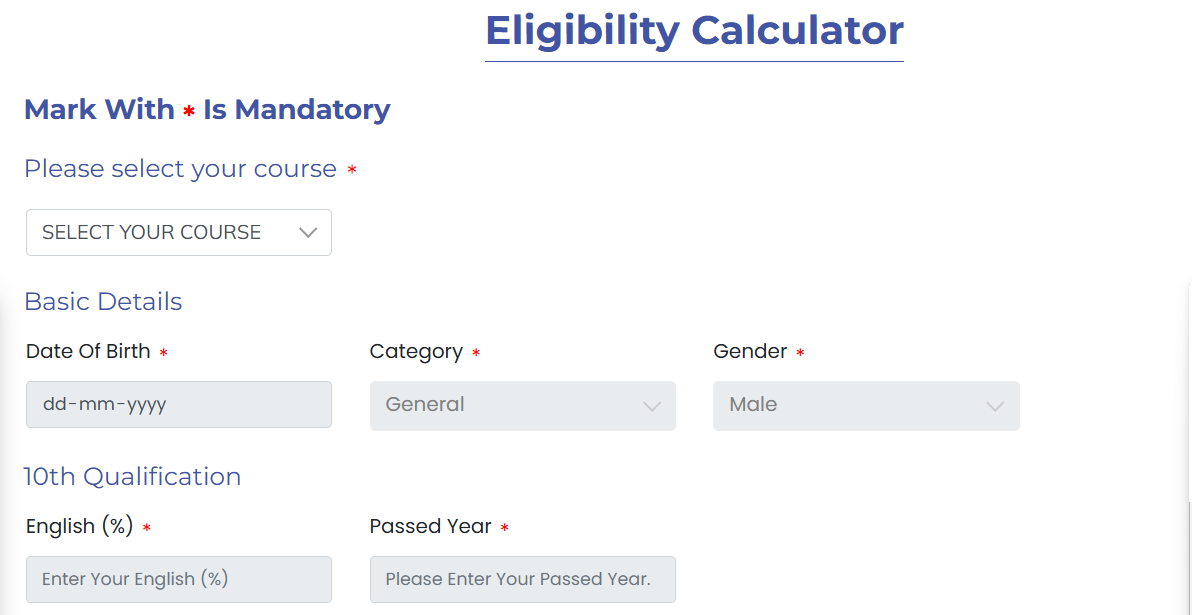
Table of Contents
AMET Marine Engineering Admission Process
AMET follows an admission process for its undergraduate maritime programs.
The general process includes:
- Complete the online application form.
- Submit the required academic details.
- Participate in the university’s selection process.
- Meet the applicable entrance examination requirement.
- Complete the required medical examination.
- Pay the admission and course fees after selection.
The formal admission procedure of AMET clearly mentions that students for undergraduate courses are short-listed according to their AMETCET and class 12 board examination marks. For the course of B.tech. Marine Engineering, the shortlisted candidates must also fulfill the entrance examination criteria.
The official admission procedure of the university requires IMU-CET qualification or the requisite percentile score in the state-level engineering entrance examination. Medical tests by DGS approved doctors are also mandatory. The current admission notice must be referred to as criteria for the entrance exam, which may vary.
How to Prepare for IMU-CET and Marine Engineering Admission
IMU-CET is an important entrance examination for students planning to enter maritime education.
A good preparation strategy includes:
- Understanding the Physics, Chemistry, and Mathematics syllabus
- Practicing numerical problems regularly
- Revising important concepts
- Solving previous-year questions
- Taking mock tests
- Improving speed and accuracy
The Crack IMUCET book is very useful for students preparing for IMU-CET because it helps them prepare systematically.
The Merchant Navy Decoded app can also be used for exam preparation as well as company selection.
The test series, mock tests, and daily quizzes in this app will help students practice on a regular basis and identify the areas where they require more revision. Using a book for systematic practice and an app for regular quizzes will help the preparation process become less difficult. Regular practice is more important than cramming in the last few weeks before the examination.

Is AMET Marine Engineering Worth the Fees?
Whether AMET is worth the investment depends on the student’s career goals, financial situation, and expectations from the college. Marine Engineering is a specialized degree. Students need to consider more than just the tuition fee when selecting a college.
1. Maritime Education
AMET offers a dedicated Marine Engineering program with a focus on the technical aspects of ships. The course includes academic subjects and practical training relevant to marine engineering.
2. Residential Training
The residential format allows students to follow a structured academic and training routine. However, students should check the hostel rules and facilities before joining.
3. Career Opportunities
Marine engineering graduates may pursue careers in the technical department of merchant ships. Career progression depends on the required examinations, professional certifications, sea service, and individual performance.
4. Total Cost
A comparison should be made between the total cost of education and not just the tuition fee. Hostel costs, examination costs, medical costs, traveling, and many other costs might influence the budget. Prior to making any decision, students need to do a comparative study between AMET and other Marine Engineering-approved institutions.

FAQ’s (Frequently asked Questions)
AMET’s published fee structure divides the annual fee into three terms. Students should confirm the current payment schedule and deadlines with the university before admission.
The published fee schedule lists the admission and registration fee as non-refundable. Students should read the current admission and refund rules carefully before making a payment.
The published fee schedule includes a refundable caution deposit. Students should confirm the exact amount and refund conditions for their admission year.
The university’s published fee structure states that examination fees are paid separately every semester. Students should include these charges when preparing their budget.
AMET’s published admission information includes qualifying IMU-CET or meeting the specified state-level engineering entrance requirement. Students should check the current admission rules to confirm the options available for their batch.
Completing the degree does not automatically guarantee employment on a ship. Career opportunities depend on eligibility, professional requirements, company selection, and the availability of suitable positions.
Students should check the official AMET University website and its latest admission prospectus. They can also contact the university’s admissions office to confirm the fee structure for their admission year.