BSc Nautical Science Government College Fees

B.Sc. Nautical Science is one of the most sought-after undergraduate courses for students interested in making a career in the Deck Department of the Merchant Navy. Also, the fees are an important point in selecting a college, especially for those students who want to have a government college with comparatively controlled academic costs.
The Indian Maritime University (IMU) is the premier maritime education institute in India, a government university with campuses across India. It offers a three-year full-time B.Sc. in Nautical Science covering navigation, seamanship, ship operations, maritime regulations, and other subjects that are essential for a career at sea.
The present fee structure for IMU mentions the annual fee for the three-year residential B.Sc. Nautical Science program as ₹2.75 lakh per academic year. The present fee structure for IMU mentions the annual fee for the three-year residential B.Sc. Nautical Science program as ₹2.75 lakh per academic year. “This will make the approximate academic fee for three years Rs 8.25 lakh, excluding any expenses that may be charged separately.” “This will make the approximate academic fee for three years Rs 8.25 lakh, excluding any expenses that may be charged separately.”
What Is BSc in Nautical Science?
BSc in Nautical Science is a three-year undergraduate degree program focused mainly on the deck side of ship operations.
Students study subjects related to:
- Navigation
- Seamanship
- Ship stability
- Cargo handling and stowage
- Maritime communication
- Marine engineering fundamentals
- Meteorology
- Maritime laws and regulations
- Bridge equipment
- Ship operations
- Voyage planning
- Marine safety
This program would equip students for a career profile as deck officers in the Merchant Navy and the maritime industry. The program is hostel-based on IMU campuses; thus, the student must have a look into hostel and living expenses along with that while calculating the overall budget.
Which Government Colleges Offer BSc in Nautical Science?
For students specifically looking for a government option, Indian Maritime University is the most important name to consider.
IMU is a central government university dedicated to maritime education and training. Its School of Nautical Science offers Bsc in Nautical Science, along with the Diploma in Nautical Science program. The university lists campuses for nautical studies at:
- IMU Chennai
- IMU Kochi
- IMU Kolkata
- IMU Mumbai Port
The exact availability of a particular program or seat intake can vary by admission cycle, so students should always check the current IMU admission notification before applying.
It is also important to understand the difference between an IMU campus and an IMU-affiliated private institute. An private institute may offer an IMU-approved BSc in Nautical Science course, but that does not make the institute a government college. IMU’s official affiliated-institute list separately identifies institutions offering BSc in Nautical Science.
BSc Nautical Science Government College Fees
The current fee structure published by IMU gives the following figures for its BSc in Nautical Science program:
Fee Component | Amount |
Course duration | 3 years |
Program type | Residential |
Annual academic fee | ₹275,000 |
Program fee | ₹30,000 |
Odd semester fee | ₹122,500 |
Even semester fee | ₹122,500 |
Approx. academic fee for 3 years | ₹825,000 |
The 2.75 lakh per year is the sum of 30,000 as a program fee, plus both the semester fees of 122,500 each. IMU also says the said tuition fee structure is applicable to the IMU campuses, not the affiliated institutions. Thus, a student must not presume the fee of every IMU B.Sc Nautical Science-approved campus.
Is BSc in Nautical Science in a Government College Cheap?
Compared with many private maritime institutes, a government college option can be attractive because students get access to a recognized public maritime university and its campus facilities. However, the total cost should not be calculated using tuition fees alone.
Students may also need to budget for:
- Hostel-related expenses
- Food and mess charges
- Uniforms
- Books and study material
- Medical examination
- Travel expenses
- Personal expenses
- Required maritime training and certification expenses, wherever applicable
The actual amount can vary depending on the campus and the expenses applicable during the particular admission year. This is why comparing only the advertised course fee can sometimes give an incomplete picture of the total cost.
BSc in Nautical Science Government College Eligibility
Students applying for a B.Sc. in Nautical Science generally need to satisfy both academic and medical requirements.
The IMU program currently lists these basic academic requirements:
- 10+2 or equivalent qualification from a recognized board
- Physics, chemistry, and mathematics as compulsory subjects
- At least 60% aggregate marks in PCM
- At least 50% marks in English in the 10+2 examination
- Candidates must meet the prescribed medical fitness requirements
- Candidates must satisfy the applicable age and other admission conditions
For SC/ST candidates, IMU lists a 5% relaxation in the PCM eligibility requirement, while the English requirement does not receive the same relaxation.
Another useful feature is the eligibility calculator. Instead of manually trying to work out whether your marks meet the requirements of a particular Merchant Navy course, you can use the calculator to check your eligibility based on your academic details. A medical fitness certificate from a doctor approved by the DG Shipping is required for admission.
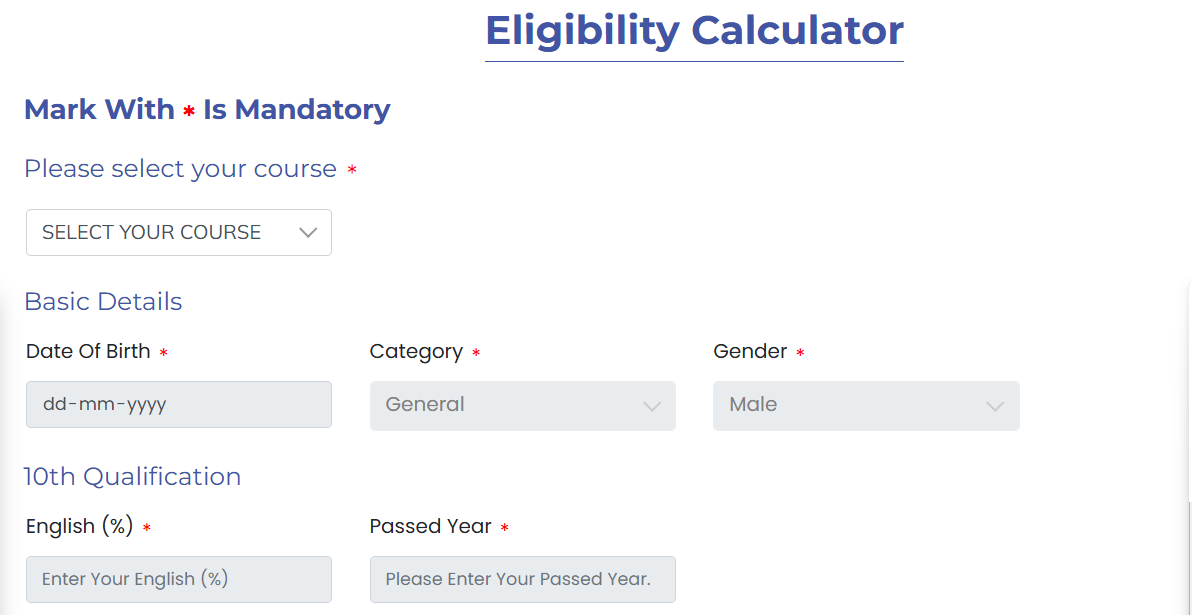
Table of Contents
How to Get Admission to Government BSc in Nautical Science Colleges?
Admission to BSc in Nautical Science at IMU is not simply based on paying the college fee and getting a seat. For the DGS-approved programs, including BSc in Nautical Science, IMU states that admission is based on the IMU-CET through an all-India merit-based process.
A typical admission process involves:
- Checking the eligibility requirements.
- Registering for the IMU-CET.
- Appearing for the entrance examination.
- Securing a suitable rank or percentile.
- Participating in the counseling and seat-allotment process.
- Completing document verification.
- Completing the required medical fitness formalities.
- Paying the applicable fees and confirming admission.
It is important to note that the precise admission time and cutoffs, counseling norms, and number of available seats are not fixed and will be amended each year; students must consult the current IMU admission alerts before taking any actions.
Government BSc in Nautical Science College vs. Private College
Both government university campuses and private maritime institutes can provide a pathway toward a maritime career, but students should understand the difference before choosing a college.
Factor | IMU Government Campus | Private/IMU-Affiliated Institute |
University | Indian Maritime University | Affiliated/approved institution |
Ownership | Government university | Usually private |
Fee structure | Set by IMU for its campuses | Varies by institute |
Admission | IMU admission process | Depends on applicable admission rules |
Campus | IMU campus | Individual institute campus |
Total cost | Depends on applicable IMU and additional charges | Can vary considerably |
Selection | Merit-based admission process | Varies by program/institute |
An important point is that IMU affiliation does not mean government ownership.
Under the BSc in Nautical Science Affiliated Institutes section, the IMU list differentiates between affiliated colleges in separate mentions, e.g., HIMT College & Tolani Maritime Institute. Hence, if you are looking primarily for a govt college, then the IMU campuses, you should search for “IMU campus” and not for “IMU affiliated college.”
Why Consider a Government College for BSc in Nautical Science?
Government university campuses can be a good option for students who want a recognized maritime education with a comparatively structured fee system.
Some important advantages include:
- Degree awarded through a government maritime university
- Structured academic curriculum
- Residential campus environment
- Maritime-focused education
- Exposure to navigation and ship-related subjects
- Access to university facilities
- A competitive admission system
- Strong focus on maritime education
The names of the colleges are not sufficient to secure a good career in the Merchant Navy. The candidates must also satisfy medical requirements, pass exams, and complete necessary training.

What Does B.Sc Nautical Science Cost in Total?
If we consider the current IMU campus academic fee of ₹2.75 lakh per year, the basic three-year academic cost comes to approximately:
₹2.75 lakh × 3 = ₹8.25 lakh
This should be treated as an approximate academic-fee calculation rather than the final amount a student will spend.
The overall budget can become higher after adding:
- Hostel expenses, where applicable
- Mess and food
- Uniform
- Books
- Medical expenses
- Travel
- Personal expenses
- Other course-related requirements
Students should check the latest fee notice issued by IMU before making a final financial plan because fee structures can be revised.

Is BSc in Nautical Science Better Than a DNS?
B.Sc. Nautical Science and DNS are both popular courses into the deck side of the Merchant Navy, but they are structured differently. B.Sc. Nautical Science is a three-year undergraduate degree program.
DNS, or Diploma in Nautical Science, is a shorter pre-sea training course that, through the required procedure, is converted to the B. Sc. (Applied Nautical Science).
The better option depends on factors such as
- Your preferred course structure
- Sponsorship requirements
- Financial situation
- Career plan
- College and company options
- Your preference for a degree-based three-year course or a DNS pathway
Students should compare the complete course structure rather than choosing a course only because its initial fee looks lower.
How to Choose the Right BSc in Nautical Science College
Fees should definitely be considered, but they should not be the only deciding factor.
Before taking admission, check:
- Whether the institute is government-owned, affiliated, or private
- Current DGS approval
- Current IMU affiliation, where applicable
- Course duration
- Total academic fees
- Hostel and mess charges
- Medical requirements
- Placement and training arrangements
- Campus facilities
- Company tie-ups, if applicable
- Previous student outcomes
- Current admission rules
Above all, ensure that these details are correct for the current academic year. Nautical colleges may alter fees, intake, admission process, etc.
Track BSc in Nautical Science Forms and College Information With Merchant Navy Decoded
Finding the right college is only one part of the admission process. Students also need to keep track of application forms, eligibility requirements, entrance preparation, and college options.
The Merchant Navy Decoded app can be useful for students preparing for a Merchant Navy career. It provides features such as
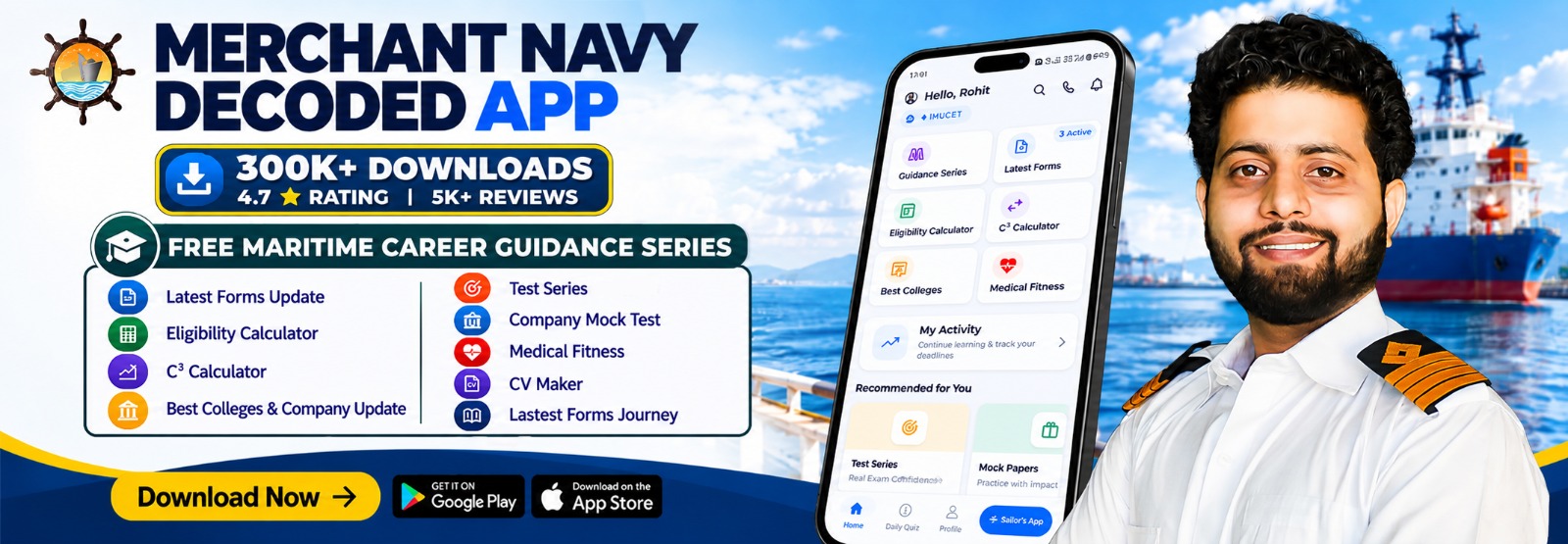
- Latest form tracking to help students keep an eye on important application forms.
- Best college information to explore and compare suitable maritime colleges.
Test series for entrance and sponsorship exam preparation.
The Crack IMUCET book is another useful preparation resource for students targeting IMU-CET. It can help you practice important concepts and questions and strengthen your preparation with focused revision.
The video explains the fee structure and other important points students should consider while selecting a government college for BSc Nautical Science. It can help students and parents understand the costs involved and make a better decision about their Merchant Navy career.

FAQ’s (Frequently asked Questions)
AMET currently lists an application fee of ₹1,250 for DNS applications. The application fee is non-refundable.
AMET currently specifies ₹25,000 as the admission and registration fee for selected candidates.
AMET provides program-specific and batch-specific fee details. Fee details currently available on the university website for various programs like B.Sc. Nautical Science and B.E. Marine Engineering have been provided in great detail, but the actual DNS fee should be obtained from the DNS admission/fee brochure.
Students should not assume this. AMET’s maritime fee structures commonly list the food & accommodation fee separately, so the DNS batch-specific fee structure should be checked for the exact arrangement at the university.
Refunds depend on the cancellation date and the applicable AMET refund policy. For 2026–27, AMET has published a specific cancellation schedule with different deductions depending on when admission is cancelled.
Students should use AMET’s official admission and payment channels and avoid making payments to individuals claiming to guarantee admission or sponsorship. The university provides its own application and fee-payment procedures.