Can a PCB Student Join the Merchant Navy

Students selecting Physics, Chemistry, and Biology (PCB) in Classes 11 and 12 develop an interest in joining the Merchant Navy in the future. But there is one crucial query that they encounter—Is it possible for a PCB student to join the Merchant Navy without mathematics?
The answer is yes, but the career options for PCB students in the Merchant Navy will be different from PCM students.
Popular officer entry courses like Diploma in Nautical Science (DNS), B.Sc. Nautical Science, and B.Tech. Marine Engineering need Mathematics in 10+2. But there are other ways for PCB students to join the shipping industry. Let us see what courses are available for PCB students and what are their eligibility criteria and career prospects.
Can a PCB Student Join Merchant Navy After 12th?
Yes, a PCB student may join the Merchant Navy after class 12th. But the courses available will be determined by what he has studied in class 10th and class 12th.
There are various departments in the Merchant Navy, such as the deck, engine, and catering departments. These departments have their own criteria for education.
Such as:
- Deck officers take care of the navigation, cargo handling, and proper movement of ships.
- Engineers take care of the machinery on board the ship.
- Catering is all about food service.
Although most direct entry courses into officer level need PCM, some rating courses and catering courses take candidates even from other educational streams. Thus, joining the PCB does not rule out the Merchant Navy as a career choice entirely.
Merchant Navy Courses Available for PCB Students
PCB students can explore the following options depending on their academic qualifications.
A. GP Rating Course
General Purpose Rating (GP Rating) is one of the options available to students having done Class 12 with PCB. Surprisingly, the eligibility criteria for GP Rating are largely based on the qualification criteria for Class 10 and not the Class 12 stream chosen by the students.
The academic criteria include:
- Passed Class 10 from a recognized board.
- 40% aggregate marks in Class 10.
- Science and Mathematics as subjects in Class 10.
- 40% marks in English in Class 10, 12, or subsequent eligible qualifications.
- Course tenure is usually six months and involves pre-sea training.
Once a candidate completes his/her training and examinations, he/she may join as a rating on board in the deck/engine departments.
Career prospects: A GP rating is an entry-level course that allows for joining the ship through sea service and training.
B. Certificate Course in Maritime Catering (CCMC)
Another course that can be chosen by PCB candidates is the Certificate Course in Maritime Catering (CCMC). Unlike GP Rating, this course does not mandate students to study mathematics and science as a mandatory subject combination in Class 10.
The basic educational qualifications for this course are
- Class 12 passed from any recognized board in any stream.
- Aggregate minimum 40% marks in Class 12.
- Minimum 40% marks in English in Class 10/12.
This course is designed to train candidates for the duties related to catering on board ships.
Having completed the necessary training, candidates can work in the department of catering on ships and can help in preparing food and maintaining hygiene. It is an choice for candidates interested in catering services.
Even though PCB students cannot take the DNS course directly after Class 12, there is yet another alternative. As per the prospectus of the Indian Maritime University 2026-27, those with specific bachelor’s degrees will also be eligible academically for DNS.
They are:
- B.Sc. in Physics
- B.Sc. in Mathematics
- B.Sc. in Chemistry
- B.Sc. in Electronics
The candidate must have taken physics as a single subject in one year of the degree course and obtained an average of at least 55% marks in the final year. Candidates will also be required to fulfill the English, medical, and other admission requirements.
Table of Contents
Can a PCB Student Become a Deck Officer?
Yes, but the direct path is not possible with PCB alone. A deck officer takes care of all the aspects of navigation, vessel operation, cargo handling, and safety on the vessel.
Some of the most common educational paths that one could follow to be a deck officer are as follows:
- B.Sc. Nautical Science
- Diploma in Nautical Science (DNS)
Both these courses normally need physics, chemistry, and mathematics up to 10+2. The PCM minimum score normally should be around 60% and 50% marks in English in either class 10 or 12 according to IMU’s criteria of 2026-27. For PCB students interested in the above courses, there are options for taking mathematics as an additional course.
How Can PCB Students Check Their Eligibility?
Before applying for any marine course, it is important that candidates verify their eligibility in terms of their academic qualifications, grades, age, and medical fitness. Eligibility criteria vary from course to course, college to college, and company to company. Even if a candidate fulfills the basic criteria for a particular course, some sponsoring companies might have their own eligibility criteria.
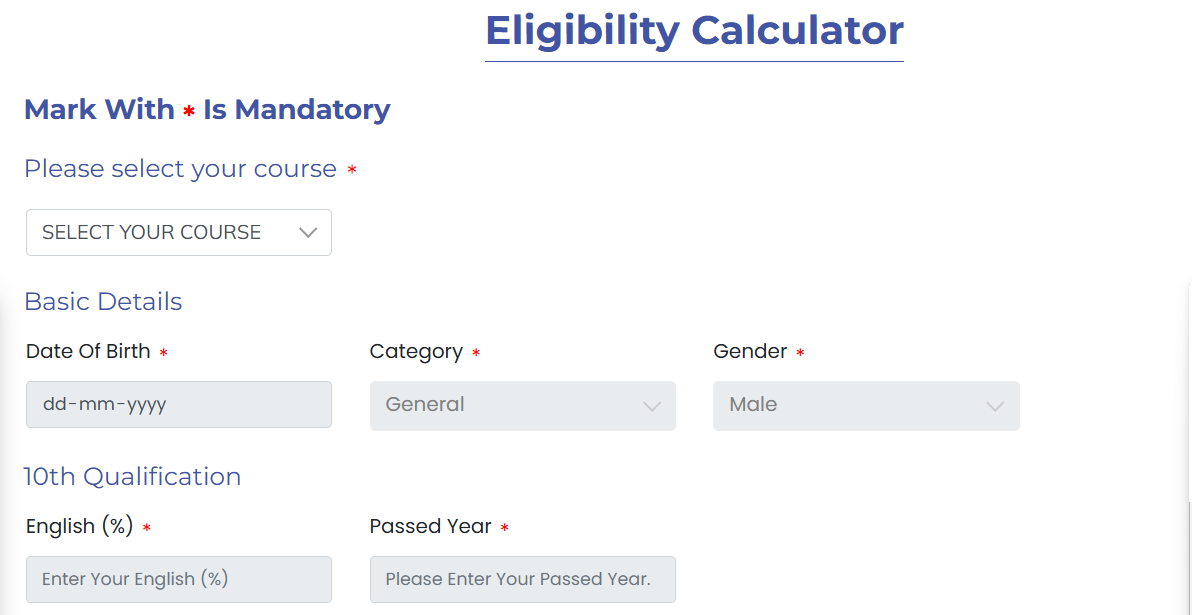
The Merchant Navy Decoded Eligibility Calculator can help students check their eligibility for different courses and colleges using their academic details.
Start Your Merchant Navy Journey with the Merchant Navy Decoded App
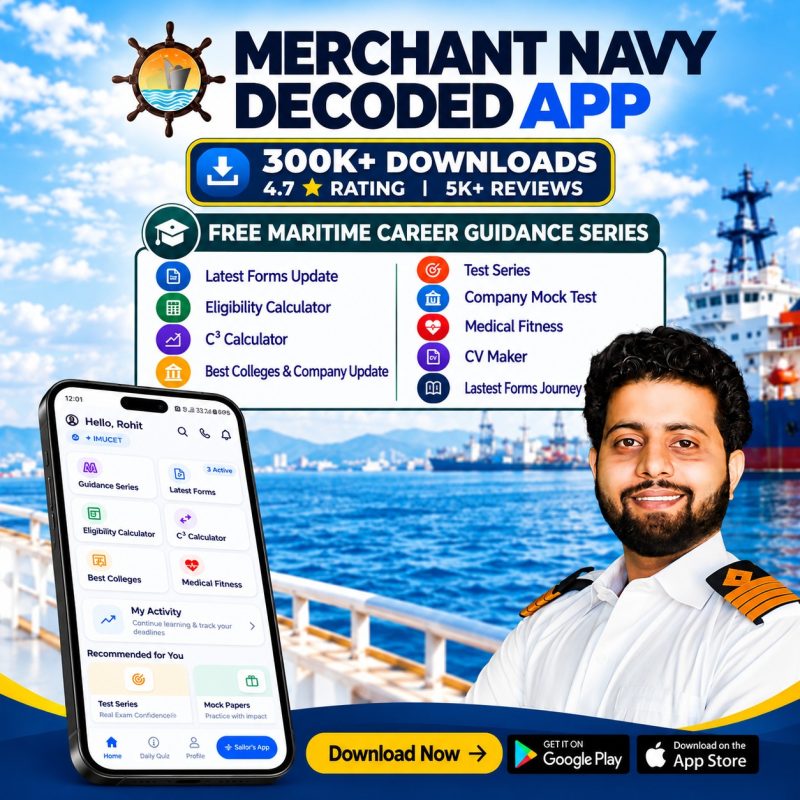
The Merchant Navy Decoded application also brings various useful tools together, such as a step-by-step career journey guide, college and sponsorship assistance, mock papers of companies, test series, daily quizzes, and CV builder. The most recent version of this app also has an AI assistant who can answer questions about maritime careers and help students find useful information.
Rather than wasting time on searching for basic admission information from different platforms, students can use these tools to plan and track their progress.


Can a PCB Student Become a Marine Engineer?
A career in marine engineering is another highly desired choice among students aspiring to join the Merchant Navy. Marine engineers are those who manage to control and repair the machinery of the ship. But the program of B.Tech. Marine Engineering involves some tough criteria of education too.
The minimum eligibility requirements generally involve:
- Physics, chemistry, and mathematics subjects in Class 12.
- Percentage of 60% in PCM.
- At least 50% marks in the English subject of Class 10 or 12.
Meeting age & medical eligibility requirements as laid down. Thus, the students of PCB background cannot opt for B.Tech. Marine Engineering on the basis of their existing Class 12 subjects.
What Is the Role of IMU CET for PCB Students?

IMU CET is one of the entrance examinations for certain maritime courses. This test is necessary to get admission into courses such as B.Sc. Nautical Science, DNS, and B.Tech. Marine Engineering. But the simple act of appearing for or clearing IMU CET does not qualify a student to take up all courses.
A student taking up a PCB course without mathematics is not eligible for the courses due to the standard PCM eligibility criteria for officer-entry courses.
Students must first determine which course they would like to do and then look at the eligibility criteria for that course before appearing for IMU CET.
The book “Crack IMUCET” by JMDI Academy may be helpful for the students who become eligible for officer-entry courses due to the acceptance of additional mathematics qualifications by the institute. Apply now with JMDI Academy to begin your preparation with the right guidance and study resources.
Conclusion
Hence, can a PCB student take up the Merchant Navy? Yes, without a doubt. But the career paths that open up for them depend on the educational qualifications and the chosen course.
GP Rating and Maritime Catering are among the courses that are open after class 12, depending on whether the candidate fulfills their requirements or not. Those interested in pursuing the career of a deck officer have an alternative bachelor’s degree option or an equivalent mathematics option.
The foremost thing is to be aware of the eligibility requirements before choosing the course. With the correct information and appropriate planning, PCB students can explore a career in the maritime industry without making unnecessary mistakes.

FAQ’s (Frequently asked Questions)
It depends on the company and the program being enrolled in. Sponsorships exist for rating-level positions, whereas DNS and other officer entry sponsorships will require PCM eligible individuals.
The Indian Navy and Merchant Navy have their own set of recruitment procedures for joining the services. PCB stream students should not consider the eligibility criteria of the Merchant Navy for the Indian Navy.
Yes. Once a candidate completes the course, satisfies the medical criteria, and acquires the required certificates, he or she will be eligible to work on cargo ships sailing internationally.
Not all. Mathematics is essential for some technical and commissioned courses, but it is not an absolute requisite for all maritime careers. Other rating and catering courses have their academic prerequisites.