DNS Sponsorship Interview Questions and Process
An interview for a DNS sponsorship forms an integral part of the journey for those students who wish to join the Merchant Navy through a company-sponsored course. Good performance in Class 12 or DNS eligibility does not guarantee that a person gets sponsored. Each shipping company has its own recruitment and selection procedure to find out whether a candidate is academically qualified, physically fit, and competent enough to pursue a career on the seas.
Every company has a different recruitment and selection process. For some companies, the interview process begins with an online written test followed by the interview process, while for some companies, the recruitment process could have some other steps like psychometric tests before the interview process. Anglo-Eastern, for instance, currently follows the steps of an online entry test, psychometric assessment, panel interview, medical and eye test, and final merit selection.
What Is a DNS Sponsorship Interview?
A DNS sponsorship interview is conducted by a shipping company or its recruitment team to assess whether a candidate is suitable for its sponsored cadet program.
The interview is not limited to academic knowledge. Interviewers can look at the candidate’s
- Communication skills
- Confidence
- General awareness
- Basic technical knowledge
- Understanding of the Merchant Navy
- Reason for choosing a maritime career
- Personality and attitude
- Ability to handle responsibility
- Awareness of life at sea
The company may also consider academic performance, entrance-test scores, extracurricular activities, and other selection parameters.
For example, Anglo-Eastern states that its interview process gives weight to academics as well as extracurricular activities and sports, while its final merit list considers Class 12 PCM percentage, the company’s online-test score, interview score, and IMU-CET ranking.
DNS Sponsorship Selection Process
There is no single selection process followed by every shipping company. However, a typical process can include:
- Online registration
- Eligibility screening
- Written or online examination
- Aptitude or psychometric assessment
- Personal or panel interview
- Medical and eye examination
- Document verification
- Final merit list
- Provisional or final sponsorship offer
- Admission to the allotted DNS institute
The order can change depending on the company.
For example, Anglo-Eastern’s panel interview comes before the medical and eye examination, which takes place after the online test and psychometric assessment.
The recruiting process for MSC until 2026, on the other hand, involves registration, then an online written exam, and then placement into DG Shipping-approved institutions.
Step 1: Online Registration
The first step is usually completing the company’s sponsorship application.
Candidates may have to provide:
- Personal details
- Date of birth
- Educational information
- Class 10 marks
- Class 12 marks
- PCM percentage
- English marks
- Contact details
- IMU-CET information, where applicable
- Identity documents
Candidates should enter their information carefully. Incorrect marks, dates, or other details can create problems during document verification.
Step 2: Eligibility Screening
After registration, the company checks whether the candidate satisfies its basic eligibility conditions.
The screening can include:
- Academic qualifications
- PCM percentage
- English marks
- Age
- Nationality requirements
- Applicable IMU-CET requirements
- Other company-specific conditions
Meeting the minimum eligibility requirements does not guarantee selection. Companies can shortlist candidates based on their own recruitment criteria.
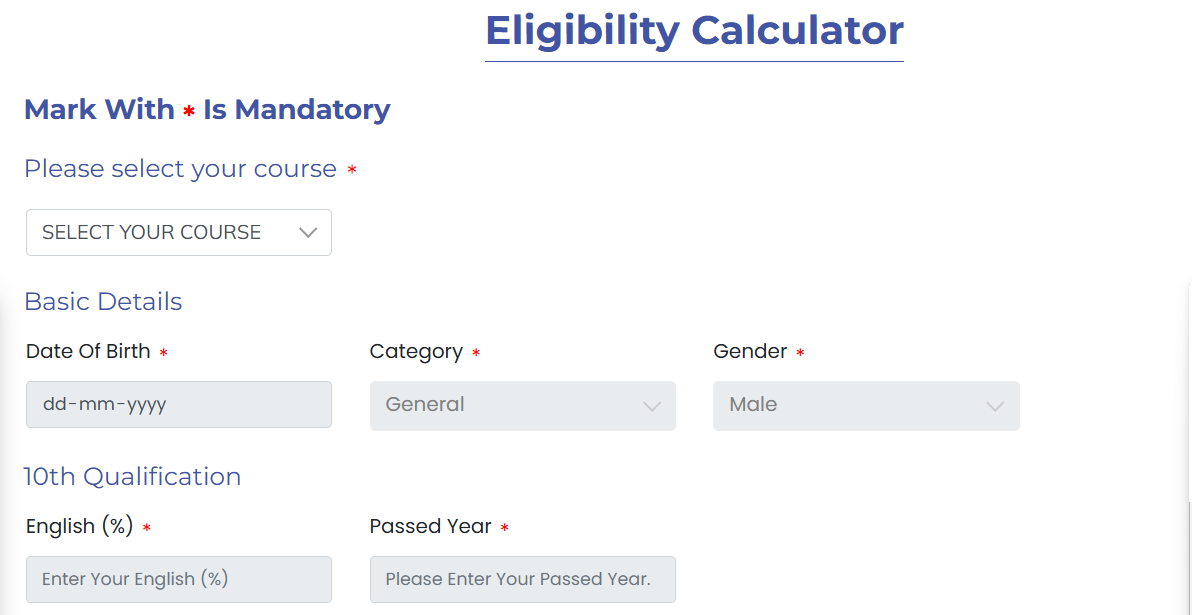
Want to check whether you meet the DNS eligibility requirements? You can use the Merchant Navy Decoded Eligibility Calculator to enter your academic and basic details and get an eligibility check for relevant maritime courses.
Step 3: Written Sponsorship Examination
Many shipping companies conduct a written or online examination before the interview.
The purpose is to assess the candidate’s academic foundation and aptitude.
Depending on the company, questions can cover the following:
- Mathematics
- Physics
- Chemistry
- English
- Aptitude
- Logical reasoning
- General awareness
The difficulty and pattern vary between companies.
For instance, the following details about Anglo Eastern’s DNS test can be given. The DNS test is an online test consisting of two parts. The first one is based on mathematics, physics, chemistry, English, aptitude, and general knowledge at the Class 12 level, while the second one is a personality-based test.
Step 4: Psychometric Assessment
Some firms make use of psychometric tests as part of the selection process. A psychometric test aims at understanding the attributes and characteristics of an individual’s personality, behavior, decision-making abilities, and compatibility with the work environment.
There is no need to try to predict a “perfect” personality profile. The candidates are expected to provide honest answers. For instance, Anglo-Eastern makes use of a personality-based psychometric test as part of the recruitment process of DNS.
Step 5: DNS Sponsorship Interview
If applicants meet the mandatory preliminary stages, they will be called for personal or panel interviews. This is perhaps the most crucial stage as the organization gets a chance to interact with the candidate personally.
An interview could have one or more interviewers and could comprise questions on academic background, personality, maritime affairs, and general awareness. The candidate must be ready to justify his or her answers and not just mug up answers.
Common DNS Sponsorship Interview Questions
1. Tell us about yourself.
This is often used as an opening question. Keep the answer short and organized. Mention your education, academic background, interests, and reason for applying for DNS.
2. Why do you want to join the Merchant Navy?
What the interviewer wishes to ascertain is whether you actually know something about the field and have a genuine reason for joining it. An appropriate response would be to make clear your understanding that the Merchant Navy entails discipline, responsibility, teamwork, technical knowledge, and prolonged absence from home.
3. Why did you choose DNS?
You should understand why you are choosing the DNS route instead of another maritime program. Explain your interest in the deck department and your long-term goal of becoming a navigating officer.
4. What does a deck cadet do?
You should know the basic responsibilities of a deck cadet. These can include assisting officers with navigation-related duties, deck operations, maintenance, safety activities, and other training responsibilities under supervision.
5. What is the difference between a deck officer and an engineer?
A deck officer is primarily associated with navigation, cargo operations, ship operations, and deck-related responsibilities.
A marine engineer works mainly with the ship’s machinery, propulsion systems, electrical and mechanical equipment, and engine-room operations.
6. What is the role of a captain on a ship?
The captain has overall command and responsibility for the vessel, including safe navigation, crew management, operational decisions, and compliance with applicable regulations.
7. What is navigation?
Navigation is the process of determining a vessel’s position, planning its route, and safely controlling its movement from one location to another.
8. Why is safety important on a ship?
Ships operate in an environment where mistakes can have serious consequences. Safety procedures help protect the crew, vessel, cargo, and marine environment.
9. Are you comfortable staying away from your family?
This is a common type of question because seafarers can spend extended periods away from home. Answer honestly and demonstrate that you understand the lifestyle before choosing the profession.
10. What do you know about our company?
Candidates should research the sponsoring company before attending the interview.
Know basic information such as:
- The company’s business
- Type of vessels it operates or manages
- Major areas of operation
- Training or cadet programs
- Company values
- Sponsorship process
Do not memorize an entire company website. Focus on understanding the organization.
Questions About Your Academic Background
Interviewers can ask questions related to your Class 11 and Class 12 studies.
Examples include:
- Which subject do you like the most?
- Which subject do you find difficult?
- What is Newton’s second law?
- What is Ohm’s law?
- What is the difference between mass and weight?
- What is the basic principle of buoyancy?
- What is the SI unit of pressure?
- What is the difference between speed and velocity?
- What is a vector?
- What is probability?
The questions are not necessarily difficult. Interviewers may use basic questions to see whether you understand fundamental concepts.
English and Communication Questions
Communication is important for a seafarer because officers and crew members need to communicate clearly while working in a multinational environment.
The interviewer may ask:
- Introduce yourself in English.
- Why do you want to join the Merchant Navy?
- What are your strengths?
- What are your weaknesses?
- What are your career goals?
- Describe your school experience.
- Why should we select you?
The purpose is not to test whether you speak perfect English. The interviewer generally wants to see whether you can communicate clearly and confidently.
Table of Contents
General Awareness Questions
Some sponsorship interviews can include questions about current affairs and general knowledge.
Candidates should have a basic understanding of:
- India
- Geography
- Major ports
- Oceans and seas
- International organizations
- Maritime industry
- Current events
- Basic shipping terminology
Do not spend all your preparation time memorizing random facts. Focus on subjects that are relevant to the interview and the maritime industry.
Maritime Questions You Should Know
Candidates should understand basic maritime terminology before attending a sponsorship interview.
You should be familiar with terms such as the following:
- Port
- Starboard
- Bow
- Stern
- Bridge
- Deck
- Engine room
- Cargo
- Anchor
- Lifeboat
- Muster station
- Watchkeeping
- Navigation
You should also understand the basic difference between the deck and engine departments.
Personal Questions in a DNS Interview
The interview may become more personal after the academic questions.
Examples include:
- What are your hobbies?
- What do you do in your free time?
- What are your strengths?
- What is one weakness you are working on?
- Who inspires you?
- How do you handle pressure?
- Have you ever worked as part of a team?
- What would you do if you disagreed with a senior?
- How do you handle failure?
There is no universal “correct” answer to these questions. The best approach is to answer honestly and give a clear reason for your response.
Situational Questions
Interviewers can also give hypothetical situations to understand your judgment.
For example:
- What would you do if a senior officer gave you an instruction you did not understand?
- What would you do if you made a mistake during training?
- How would you handle a disagreement with another cadet?
- What would you do if you noticed an unsafe situation?
- How would you react during an emergency?
A good answer should generally emphasize safety, communication, following the proper chain of command, and asking for guidance when necessary.
Questions About Life at Sea
Candidates should understand that working on a ship is different from studying at a regular college.
You may be asked:
- Do you understand that you may be away from home for months?
- Why do you want a career at sea?
- Are you comfortable living with people from different backgrounds?
- How will you handle a disciplined environment?
- What do you expect from shipboard training?
Do not give unrealistic answers just to impress the interviewer. Showing that you understand both the advantages and challenges of the profession is more convincing.
Questions About the Sponsoring Company
Candidates should research the company before the interview.
Possible questions include:
- What do you know about our company?
- Why do you want to join our company?
- What type of vessels does the company operate?
- Why did you apply to us?
- What do you expect from the sponsorship?
- What do you know about our cadet training?
A candidate who cannot explain why they applied to a particular company can create a poor impression.
What Should You Wear to a DNS Interview?
A professional appearance is important.
For a formal interview, candidates should generally wear:
- Formal shirt
- Formal trousers
- Formal shoes
- Belt
- Tie, if required
- Clean and well-maintained appearance
Anglo-Eastern specifically instructs candidates attending its panel interview to appear in formal attire with a tie. The goal is not to spend a lot of money on clothing. A clean, simple, properly fitted formal outfit is sufficient.
Documents to Carry for the Interview
Candidates should carefully read the company’s interview instructions.
Depending on the company, documents can include the following:
- Class 10 marksheet
- Class 12 marksheet
- Degree certificate, if applicable
- Birth certificate
- Passport
- IMU-CET documents
- Medical documents
- Passport-size photographs
- Application or registration documents
Anglo-Eastern, for example, asks shortlisted candidates to bring original academic certificates and other specified documents to the panel interview.
How Long Does a DNS Sponsorship Interview Last?
There is no specific amount of time for all organizations. Interviews can be short, whereas others may take longer based on the number of questions and the responses from the interviewee. The response is important rather than the time taken for the interview.
An interviewee who gives straightforward answers is always better-prepared than an interviewee who talks without answering the real question.
What If You Do Not Know an Answer?
Do not panic. If you do not know something, it is better to say so honestly rather than inventing an answer.
You can respond politely: “I am not sure about that, but I would like to learn about it.” This is better than confidently giving incorrect information.
Mistakes to Avoid During the Interview
Candidates should avoid:
- Memorizing scripted answers
- Speaking too quickly
- Giving unnecessarily long answers
- Pretending to know something they do not know
- Arguing with the interviewer
- Using slang
- Speaking negatively about previous teachers or schools
- Giving false information about marks or achievements
- Showing that they know nothing about the company
- Treating the interview casually
Confidence is useful, but it should be combined with humility and professionalism.
How to Prepare for a DNS Sponsorship Interview
A practical preparation plan can include:
Revise PCM Fundamentals
Review important Class 11 and 12 concepts instead of trying to cover every advanced topic.
Practice Speaking
Practice answering common questions aloud. This can help you become more comfortable speaking in English.
Learn About the Merchant Navy
Understand the basic career path from cadet to officer and the responsibilities of the deck department.
Research the Company
Read the company’s official website and recruitment information.
Practice Mock Interviews
Ask a teacher, mentor, friend, or family member to conduct a mock interview.
Review Your Application
Anything written in your application can become a question during the interview. Know your own academic record and the information you submitted.
JMDI Academy for Sponsorship Preparation
JMDI Academy, Dehradun, provides preparation support for students targeting Merchant Navy entrance examinations and company sponsorships.
For aspirants, preparation can include PCM, English, aptitude, mock tests, communication, and interview practice. Preparing for sponsorship and IMU-CET together can help students avoid treating the two processes as completely separate examinations.
Students preparing for DNS Sponsorship can also explore JMDI Academy’s preparation resources, including its IMU-CET book , to strengthen their exam preparation through regular practice, MCQs, sample papers, and mock tests. Along with preparation resources, Apply now with JMDI Academy to begin your preparation with the right guidance and study resources.
Merchant Navy Decoded App for Aspirants
The Merchant Navy Decoded App is another useful resource for students preparing for the Merchant Navy admission pathway.
The app provides Merchant Navy-related information and preparation resources, including an IMU-CET test series. Regular mock-test practice can help students improve speed and identify weak areas before the examination. Students can combine this with sponsorship-focused preparation and interview practice for a more complete preparation strategy..
Final Thoughts
The DNS Sponsorship Interview is not just a means to test the memory power of the candidate. This provides an avenue for a shipping company to learn more about the applicant as an individual.
A good candidate should be able to express his/her reasons for joining the Merchant Navy, know the duties of a deck cadet, be articulate, have basic knowledge of academics, and be responsible regarding safety and discipline.
Each company may have a varied process of selecting cadets. While some companies require candidates to take a written examination and a psychometric test prior to the interview, others use different recruitment systems. Anglo-Eastern has this process currently: online test, psychometric test, panel interview, medical & eye test, and merit selection.
Therefore, one should prepare for all the stages of selection and not just for the questions in the interview. All one has to do is know one’s subjects, know the profession, know the company, speak well, and, finally, be honest in answering the questions.
FAQ’s (Frequently asked Questions)
English is commonly used because it is the working language of international shipping. Candidates should be comfortable communicating in basic, clear English.
Yes. Interviewers can ask basic questions from Class 11 and Class 12 physics, chemistry, and mathematics.
Yes, they can. Questions that relate to the individual and his or her family could help in getting an understanding of the candidate’s background and motivations.
This will depend on the recruitment policy of the firm and the applicable admission cycle. While some firms recruit prior to the admission process at IMU, the ultimate DNS admission will still have to meet the applicable IMU admission criteria.
No. Candidates may still need to clear medical examinations, document verification, and other final selection requirements.
No. Prepare the key points, but answer naturally. Memorized responses can sound artificial and may become difficult to handle when the interviewer asks a follow-up question.
Stay calm and be honest. If you do not know the answer, say so politely rather than guessing or making up information.
This differs from one firm to another depending on the candidate applying. However, candidates should have academic skills, communication skills, an understanding of the marine environment, and interview preparation.
