Ganpat University BSc Nautical Science Fees
If you are planning to join the Merchant Navy after Class 12 and looking for a B.Sc. Nautical Science course, then one of the options you will come across is Ganpat University. Under its maritime programs, the university offers a 3-year BSc in Nautical Science. This course is intended for those students who wish to build a career on the deck side of the Merchant Navy and work toward becoming a deck officer.
One of the first questions students and parents typically ask is how much the course costs in total. According to the latest program information of Ganpat University, the fee for B.Sc. Nautical Science is ₹3.40 lakh per annum. This translates to a base course fee of around ₹10.20 lakh for three years. The course is of three years’ duration. But students should not assume that this figure automatically includes all expenses. Maritime courses may also include examination, training, medical, documentation, and other charges as per the applicable fee structure for the batch.
Here is a detailed look at the Ganpat University B.Sc. Nautical Science fees, eligibility, course structure, and other important points.
Ganpat University BSc Nautical Science Fees
Ganpat University currently lists the following basic information for its B.Sc. Nautical Science program:
Particular | Details |
Course | B.Sc. Nautical Science |
Duration | 3 years |
Intake | 40 students |
Listed annual fee | ₹3,40,000 |
Approx. 3-year base fee | ₹10,20,000 |
The ₹3.40 lakh annual fee is the figure currently listed by Ganpat University for the B.Sc. Nautical Science program. Therefore, if the same annual fee applies throughout the three years, the basic course fee would work out to approximately ₹10.2 lakh. This is a calculation of course fees and is not to be taken as a guarantee of the final amount payable. Universities may change tuition fees. Additional fees may apply separately.
Students should check the fee notice or admission documents of their particular batch before taking admission to see exactly what is included.
What Does the Ganpat University Fee Cover?
This is an important question because the headline course fee does not always tell the complete story.
For a maritime degree, expenses can come under different categories. Depending on the applicable batch fee structure, students may have to account for items such as
- Tuition and academic charges
- University or examination charges
- Practical and training-related expenses
- Hostel or residential expenses, if applicable
- Uniform and equipment
- Medical examination
- Maritime documentation
- Mandatory safety or STCW-related training
- Other university or regulatory charges
The exact inclusions can change, so students should not calculate their complete three-year budget only from the ₹3.40 lakh annual figure. Ganpat University also maintains an online admission system where applicants can check program information and admission-related details.
AMET DNS Application Fee
For the current admission system, AMET lists:
Application Fee: ₹1,250
This amount applies to applications for UG, PG, DNS, and GP rating programs through the university’s payment gateway. AMET states that the application fee is non-refundable.
The application fee is paid while submitting the application and is separate from the actual DNS course fee.
Ganpat University BSc Nautical Science Course Duration
B.Sc. Nautical Science at Ganpat University is a three-year undergraduate degree program.
The course combines classroom teaching with practical experience at sea. Nautical science students study subjects related to navigation, seamanship, ship operations, safety, and related areas mainly concerned with the deck department of a ship.
Ganpat University BSc Nautical Science Eligibility
Students applying for BSc in Nautical Science generally need to meet both academic and medical requirements for a career at sea.
For B.Sc. Nautical Science, the commonly followed academic requirements include:
- Passing Class 12 with Physics, Chemistry, and Mathematics (PCM)
- Meeting the required minimum marks in PCM
- Meeting the required English marks
- Meeting the applicable age criteria
- Meeting the medical and eyesight standards prescribed for seafarers
Another useful feature is the eligibility calculator. Instead of manually trying to work out whether your marks meet the requirements of a particular Merchant Navy course, you can use the calculator to check your eligibility based on your academic details. Merchant Navy Decoded lists the general B.Sc. Nautical Science eligibility as more than 60% in PCM and more than 50% in English in either Class 10 or Class 12.
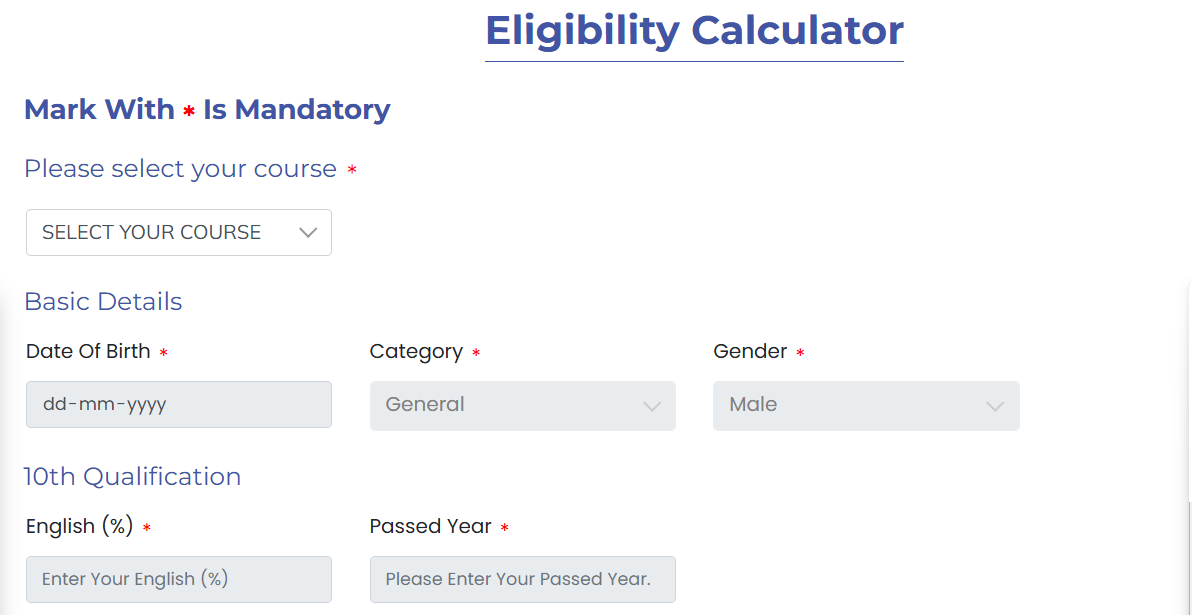
However, eligibility requirements can change between admission cycles and institutions. Students should therefore verify the exact criteria from the Ganpat University website.
Table of Contents
Medical Requirements for BSc Nautical Science
Academic eligibility is only one part of joining a nautical course. Since graduates are preparing for a career at sea, they also need to meet the applicable medical standards for seafarers.
Medical requirements generally include standards related to:
- Eyesight
- Color vision
- General physical fitness
- Hearing
- Overall medical fitness for sea service
For nautical students, eyesight and color vision are particularly important because navigation and watchkeeping are major parts of the deck officer’s work. Merchant Navy Decoded’s B.Sc. Nautical Science information notes the requirement for appropriate eyesight and states that color blindness is not accepted under the relevant medical criteria.
It is sensible to complete a proper medical examination with a DG Shipping-approved medical doctor before spending a large amount on admission. This can help identify a medical issue early rather than after joining the course.
What Do You Study in BSc Nautical Science?
B.Sc. Nautical Science is not simply a general science degree with a few maritime subjects added to it. The course is specifically focused on preparing students for work on the deck side of a ship.
Some of the major areas students study include
Navigation
Navigation is one of the most important parts of the course. Students learn how ships determine their position, plan voyages, use navigational equipment, and safely navigate from one location to another.
Seamanship
Seamanship covers the practical side of working on a ship. Students learn about shipboard operations, ropes, equipment, safety procedures, and other practical aspects of life at sea.
Ship Safety
Safety is a major part of maritime education. Students learn about emergency procedures, survival at sea, firefighting, lifesaving appliances, and other safety-related areas.
Cargo Operations
Deck officers are involved in cargo operations. Students therefore learn about cargo handling, ship operations, and the responsibilities associated with loading and discharging cargo.
Maritime Regulations
Students also learn about maritime rules, conventions, and regulations that govern safe ship operation. These subjects are reflected in the B.Sc. Nautical Science curriculum of Ganpat University, including navigation, seamanship, voyage planning, ship operations, and other maritime subjects.
Is Ganpat University BSc Nautical Science a Good Option for the Merchant Navy?
Instead of looking at a college only by its name or fee, students should check several practical points before taking admission.
For a nautical science course, some of the important things to verify are
- Whether the program has the required regulatory approvals
- Current fee structure
- Medical requirements
- Practical training arrangements
- Sea-time training arrangements
- Placement or company tie-ups
- Campus facilities
- Hostel and residential arrangements
- Previous placement records
- Total expenses for the complete course
The fee is important, but it should not be the only factor.
A slightly lower course fee doesn’t mean one college is better for every student, just as a higher fee doesn’t mean better career prospects. The key is to understand what you are actually paying for and how the training pathway works post-graduation.
Merchant Navy Decoded App for BSc Nautical Science Aspirants
Finding the right maritime course is not only about knowing the fees. Students also need to keep track of application forms, eligibility requirements, and preparation.
The Merchant Navy Decoded app can be useful for students preparing for a career in the Merchant Navy.
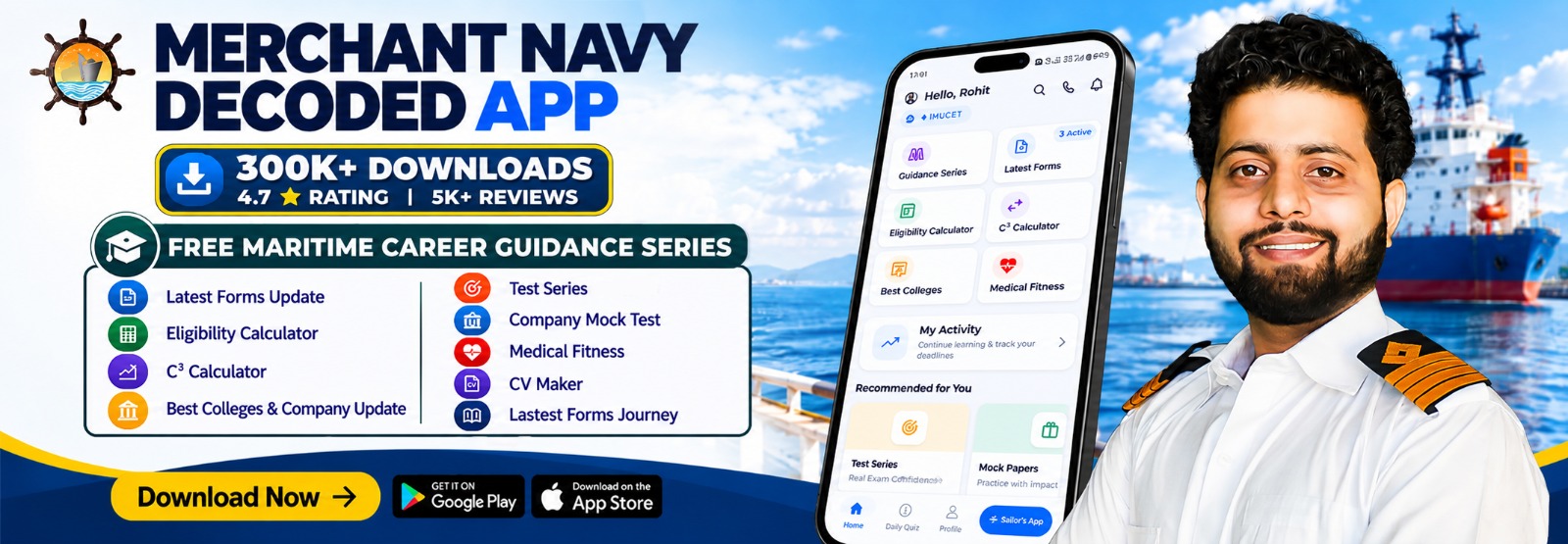
- The app provides access to test series that can help students practice for maritime entrance and competitive examinations.
It also helps with tracking the latest forms, which can be useful because admission and application deadlines can be easy to miss when several colleges and programs open applications at different times.
- The Crack IMUCET book is another useful preparation resource for students targeting IMU-CET. It can help you practice important concepts and questions and strengthen your preparation with focused revision.
Ganpat University BSc Nautical Science Admission
Students interested in the course should first check the current admission notification and eligibility requirements. Ganpat University’s online admission portal provides program selection and admission information for applicants.
The usual process involves:
- Checking eligibility.
- Completing the university application.
- Submitting academic and personal documents.
- Completing the applicable admission process.
- Paying the required admission or course fee.
- Completing medical requirements.
- Joining the program after confirmation of admission.
The exact process can vary depending on the admission cycle, so students should follow the instructions issued for their particular batch.
Ganpat University BSc Nautical Science Fees vs. Other Expenses
When doing the financial planning for a maritime degree, it is better to budget out rather than just look at tuition. The present fee is said to be Rs 3.40 lakh per annum, which includes a basic academic fee of Rs 10.20 lakh for three years.
A student may still need to budget separately for expenses such as
- Hostel and food
- Travel
- Uniforms
- Books and study material
- Medical examinations
- Maritime documentation
- Safety training
- Examination or administrative charges
- Personal expenses
The final amount can therefore be different from the simple three-year tuition calculation. For parents, asking the college for a complete fee sheet covering all three years is one of the easiest ways to avoid unexpected expenses later.
Does BSc in Nautical Science Guarantee a Job?
A B.Sc. Nautical Science degree does not automatically qualify a student as a deck officer. Upon completion of the required education and training, students must still fulfill the applicable sea-time and certification requirements and pass the relevant competency examinations.
The career progression can eventually lead toward positions such as
Deck Cadet → Third Officer → Second Officer → Chief Officer → Master/Captain
The actual timeline depends on training, sea time, examinations, company requirements, and individual performance. Students should also understand the difference between completing a degree and becoming qualified to sail in a particular officer rank.
Things to Check Before Paying the Fees
Before paying a large admission amount, keep these points in mind:
- Ask for the latest fee structure.
Do not rely only on an old fee figure found in a video, social media post, or article. Ask for the fee applicable to your admission batch.
- Check what is included.
Find out whether hostel, mess, uniforms, training, examination fees, and other charges are included or separate.
- Check the medical criteria
A medical issue can create problems later, so complete the required medical examination early.
- Understand the training pathway
Ask how practical training and sea-time training are arranged and what students need to do after the academic phase.
- Check company connections.
If the college has placement or shipping-company tie-ups, understand exactly what they mean. Do not assume that a tie-up is the same thing as guaranteed employment.
- Keep extra funds available.
Even when tuition is clearly mentioned, students can have additional personal and training-related expenses during three years.
Prepare for IMUCET and Merchant Navy Admissions with JMDI Academy
Students who are preparing for a career in the Merchant Navy often need help with entrance examinations, company sponsorship tests, interviews, and the overall admission process.
JMDI Academy is a merchant navy coaching institute in Dehradun that provides preparation for students targeting IMUCET and merchant navy sponsorship opportunities.
The coaching focuses on areas such as
- IMUCET preparation
- Sponsorship test preparation
- Merchant Navy interview preparation
- Mock interviews
- Study material and practice
- Communication and personality development
- Guidance for the Merchant Navy admission process
For students who are serious about entering the Merchant Navy after Class 12, joining a structured coaching program can provide a regular study routine and dedicated preparation environment.
FAQ’s (Frequently asked Questions)
Yes. Ganpat University’s current program information lists B.Sc. Nautical Science as a 3-year undergraduate program with an intake of 40 students.
Students from recognized boards can generally apply if they meet the applicable academic eligibility requirements. The important point is whether the student’s Class 12 qualification and subjects satisfy the requirements for the course. a BSc in
Yes. Physics, chemistry, and mathematics are normally required for B.Sc. Nautical Science eligibility. The exact minimum marks should be checked for the admission year.
Yes. A B.Sc. in Nautical Science is not a male-only degree. Female candidates who meet the academic, age, medical, and other applicable requirements can pursue a career in the deck department.
A gap year does not automatically prevent admission. However, the candidate must still satisfy the age, academic, medical, and other eligibility conditions applicable at the time of admission.
The entrance and admission requirements for a BSc change with the admission cycle and program structure. Students should check the current admission notification rather than relying on an older IMU-CET requirement.
B.Sc. Nautical Science is designed for students interested in the deck side of the Merchant Navy. After completing the required academic training, sea time, and certification requirements, graduates can progress through deck officer ranks and eventually work toward becoming a master/captain.

