
IMU Marine Engineering Fees

Choosing the right college to pursue the field of marine engineering involves more than just knowing the subject and placements. Other aspects to look out for are the cost of education, hostel fees, eligibility, and hands-on training. The Indian Maritime University (IMU) offers a four-year B.Tech. course in marine engineering from its campuses located at Chennai, Kolkata, and Mumbai Port. The course equips the students with skills to operate engines, machines, electronics, and other equipment on the ship.
For those who plan to join IMU for the year 2026-27, here is a brief about the course fees, total cost of the four-year course, eligibility, admission procedure, and other fees.
IMU Marine Engineering Fees 2026–27
For the 2026–27 academic session, IMU lists the annual fee for its four-year residential B.Tech. Marine Engineering program at ₹2,75,000 per academic year. This applies to IMU campuses and should not be confused with the fee charged by affiliated colleges.
The annual fee is divided into a program fee and semester fees.
Fee component | Amount |
Annual program fee | ₹30,000 |
First-semester fee | ₹1,22,500 |
Second-semester fee | ₹1,22,500 |
Total annual fee | ₹2,75,000 |
These figures are based on the fee structure published on IMU’s official Marine Engineering course page. Students should check the latest admission documents for any subsequent changes.
Total IMU Marine Engineering Fees for Four Years
B.Tech. in Marine Engineering is a four-year residential program. If the annual fee remains ₹2,75,000 throughout the course, the estimated tuition and semester-related cost over four years would be ₹11 lakh.
Here is the calculation:
Academic year | Estimated annual fee |
First year | ₹2,75,000 |
Second year | ₹2,75,000 |
Third year | ₹2,75,000 |
Fourth year | ₹2,75,000 |
Estimated four-year total | ₹11,00,000 |
This is a projection based on the published annual fee and not a guarantee that this would remain constant throughout all four years. The final amount could vary if IMU increases its fees or levies other fees. Set aside some additional money for your personal expenditures and for things not covered in the fee structure of the university.
What Is Included in IMU Marine Engineering Fees?
The fee details released by IMU show that the semester fee could include costs relating to academics and residence. Some of these costs include tuition, library facilities, laboratory and workshop facilities, medical facilities, industrial visits, mess, accommodation, uniforms, books, laundry, and some other activities carried out by students.
But students must note that not all costs are included in every case. The relevant fee circular should be looked at before joining.
It is useful to distinguish between the following costs:
- Academic expenses: Cost of tuition fees, laboratory, workshops, and other academic facilities.
- Living expenses: Cost of residing in hostels along with mess charges, which are included under the relevant fee structure.
- Personal expenses: Toilet items, stationery, miscellaneous, holiday travels, and others.
- Other expenses: Any separate fee structure for examination, administration, medical, and other relevant costs.
Before paying the admission fee, ask the campus for a written breakdown of the amount payable and the facilities included.
IMU Marine Engineering Fees at Different Campuses
IMU offers a B.Tech. in Marine Engineering at three campuses:
IMU campus | Location | Program |
IMU Chennai Campus | Chennai, Tamil Nadu | B.Tech Marine Engineering |
IMU Kolkata Campus | Kolkata, West Bengal | B.Tech Marine Engineering |
IMU Mumbai Port Campus | Mumbai, Maharashtra | B.Tech Marine Engineering |
The university releases the course fee structure of its own campuses. The fee that is charged annually for the course is ₹2.75 lakh; however, the applicant must find out the actual fee along with other information during counseling and the admission process.
Since the name of the course is the same, students must also consider other things while selecting the campus for themselves.
What About IMU-Affiliated Colleges?
Fees charged by institutes affiliated with IMU can be different from those of IMU colleges. Fees will vary depending on the institute and course. A private maritime college will charge fees for tuition, hostel, mess, uniforms, and other costs. The total amount calculated for an IMU college for four years cannot be automatically considered for every affiliated institute.
This means that when comparing IMU with a private marine engineering college, one must find out the fees being charged by the institute for four years.
IMU Marine Engineering Eligibility Criteria
Candidates applying for a B.Tech. in Marine Engineering at IMU must meet the university’s academic, age, and medical requirements.
The standard academic requirements listed by IMU include:
- Completion of Class 12 with Physics, Chemistry, and Mathematics (PCM) from a recognized board.
- At least 60% aggregate marks in PCM.
- At least 50% marks in English in Class 10 or Class 12, subject to the applicable admission rules.
- Compliance with the prescribed age limit.
- Medical fitness under the applicable maritime medical standards, including vision requirements.
Relaxations are provided by IMU for certain categories of candidates who are eligible. Candidates need to refer to the present prospectus since the criteria for eligibility and relaxations depend upon the official guidelines of that particular admission year.
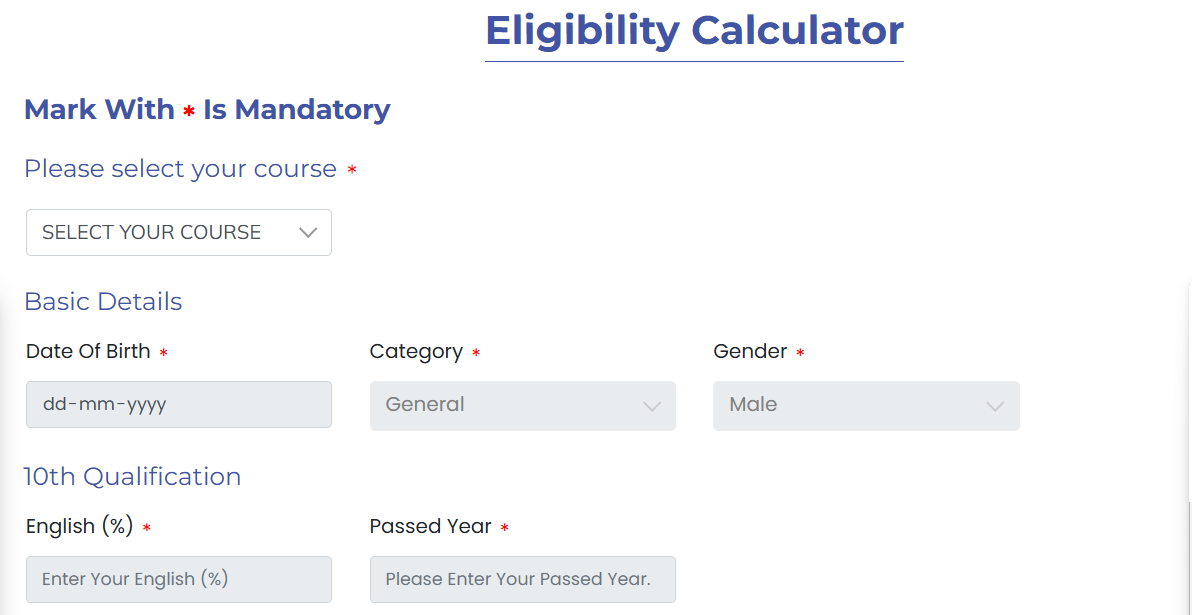
Not sure whether you qualify? Use the Eligibility Calculator to check your academic marks, age, and other details against relevant course eligibility requirements before proceeding with your application.
How to Get Admission to IMU Marine Engineering
Admission to IMU’s B.Tech. Marine Engineering program generally involves the following steps.
- Apply for IMU-CET
The candidates must go by the admission notice and apply accordingly as per the dates given in the notice. You can look at the latest prospectus to know about the entrance exam criteria for the course.
- Get ready for the entrance test.
The preparation of IMU-CET includes subjects like physics, chemistry, math, English, and aptitude as per the respective exam pattern. You can manage a proper study schedule for this purpose.
- Join the admission process.
Once the test is completed, the candidates who are qualified will have to join the admission and counseling procedure as per the university guidelines.
- Fulfill the formalities and medical necessities
The candidate will be required to produce the required educational documents and meet the necessary fitness criteria medically. Follow the instructions for certificates and fees.
- Admission confirmed.
When an available seat is allotted, fulfill the formalities and pay the necessary fees. For the latest dates and admission instructions, refer to the official IMU admissions portal.
Table of Contents
Prepare for IMU-CET and Track Maritime Admissions with Merchant Navy Decoded
IMU-CET preparation is just one among many processes for getting into the Merchant Navy. Students have to look after their college application, sponsorships, and other admission deadlines as well.
The Merchant Navy Decoded app provides all the information regarding IMU-CET preparation, test series, colleges, companies, and the Merchant Navy admission process. The form tracking features of the app will prove useful for aspirants in looking out for new openings without constantly visiting various websites.
For the students comparing marine engineering colleges, it becomes easier to get admission guidance along with exam preparation in one place.


Is IMU Marine Engineering Worth the Fees?
Deciding whether to invest in IMU Marine Engineering depends on your personal career aspirations, financial circumstances, and whether you are interested in working as an engineer onboard a vessel.
The curriculum involves both theoretical knowledge acquisition and practical training relating to marine machinery, propulsion, workshops, and other engineering aspects. The program is specifically tailored for those who intend to have a career as marine engineers aboard commercial vessels.
Nevertheless, graduating from the program doesn’t necessarily translate into getting a job or earning a certain salary. This will depend on various factors such as academic success, practical skills, good health, certifications required, etc.
Before choosing a college, consider the following:
- The total four-year cost, rather than just the first-year fee.
- The quality of workshops, laboratories, simulators, and practical training.
- The institute’s official approval and affiliation status.
- The available placement information and the conditions attached to recruitment opportunities.
- Your family’s ability to manage the fees and additional expenses.
It is also sensible to compare IMU with other approved marine engineering institutes on the basis of total cost, training facilities, and career support instead of selecting a college solely because of its name.

FAQ’s (Frequently asked Questions)
There might be an upward revision of the fees depending on the policies of the university for the same. The estimate for four years, which is ₹11 lakh, has assumed an annual fee of ₹2.75 lakh. It will be prudent to check the annual fee structure.
As per the published IMU fee structure, the annual fee is split into a program fee and semester fee. The schedule of payment is provided by the university in the admission instructions; hence, students should check the present instructions.
There might be some exam fees and other fees apart from the IMU Marine Engineering fee, and the students must refer to the fee circular and examination instructions.
Certainly, the fee structure of IMU campuses can be compared using the published fee structure. However, there are many more factors to consider in making a comparative study.
No. The ranking alone cannot ensure any admissions. The admission process is based on eligibility criteria, merit, availability of seats, counseling process, and applicable admission norms.
Yes. Although there may be many facilities included in the fees charged by the university, the students may still require some money for personal purposes, travelling, and other purposes that are not included in the applicable fee structure.
There is a different process for lateral entry. Therefore, candidates can refer to the latest IMU lateral entry notification along with fee instructions instead of following regular first year fee structure.