Tolani Maritime Institute BSc Nautical Science Fees

Tolani Maritime Institute (TMI) is a reputed maritime institute in India for students who want a career in the deck department of the Merchant Navy. Its B.Sc. Nautical Science program combines classroom education, practical training, and later shipboard training.
One of the first things students and parents usually check before applying is the TMI B.Sc. Nautical Science fees. for the 2026–27 batch is approximately ₹22.07 lakh. Actual fees may vary,, as some student-service expenses are charged on actuals and some additional charges are not included in the basic estimate.
Here is a clear breakdown of the fees, what is included, eligibility, the admission process, and other expenses you should know before applying.
TMI BSc Nautical Science Fees 2026–27
For students joining the August 2026 batch, TMI has published a detailed first-year fee structure.
Fee Component | Semester 1 | Semester 2 | First Year |
Admission & Orientation Fee | ₹35,000 | — | ₹35,000 |
Tuition Fee | ₹1,20,500 | ₹1,20,500 | ₹2,41,000 |
Campus & Establishment Fee | ₹1,35,000 | ₹1,35,000 | ₹2,70,000 |
Total Fees | ₹2,90,500 | ₹2,55,500 | ₹5,46,000 |
Student Service Expenses | ₹73,859 | ₹48,134 | ₹1,21,993 |
DGS Cess | ₹3,644 | ₹3,036 | ₹6,680 |
Refundable Caution Deposit | ₹20,000 | — | ₹20,000 |
Payable to TMI | ₹3,88,003 | ₹3,06,670 | ₹6,94,673 |
IMU Fees | ₹40,000 | — | ₹40,000 |
Total First-Year Amount | ₹4,28,003 | ₹3,06,670 | ₹7,34,673 |
TMI estimates the total fees and student-service expenses for all three years at approximately ₹22.07 lakh for students enrolling in the 2026–27 academic year.
This figure is more useful than looking only at the tuition fee because studying at a residential maritime institute involves several other expenses.
What Does the TMI BSc Nautical Science Fee Include?
The total cost includes more than tuition. TMI’s fee structure includes several components connected with campus life and training.
Tuition Fee
For the August 2026 batch, the tuition fee is ₹1,20,500 per semester, or ₹2.41 lakh for the first year.
This is the academic component of the program.
Campus and Establishment Fee
TMI charges ₹1,35,000 per semester under the campus and establishment fee, making it ₹2.70 lakh for the first year.
This forms a significant part of the overall cost of studying at the institute.
Admission and Orientation Fee
A one-time ₹35,000 admission and orientation fee is listed in the first semester.
Student Service Expenses
Students also have expenses for services and items such as
- Books
- Laundry
- Messing
- Medical insurance
- Stationery
- Uniform
For the first year, TMI estimates these student-service expenses at ₹1,21,993. However, the institute specifically notes that student-service expenses are charged on actuals, so the amount can change.
DGS Cess
A 1% DGS cess is applied to the applicable total fees and expenses. For the first year of the 2026–27 batch, TMI estimates this at ₹6,680.
Caution Deposit
A ₹20,000 interest-free caution deposit is payable at admission. TMI states that this deposit is refundable after completion of the program, subject to the applicable deduction mentioned by the institute.
How Much Does TMI BSc Nautical Science Cost in Total?
For the 2026–27 batch, the estimated cost of the complete three-year program is around ₹22.07 lakh.
This is the figure students should keep in mind when planning their finances. It is an estimate rather than a fixed amount because TMI states that student-service expenses are charged on actuals.
There can also be expenses outside the published estimate. TMI mentions that charges for things such as excursions, visits, and certain medical expenses may be charged separately at actual cost. Value-added courses can also attract additional fees.
The IMU examination fee is also not included in the published fee structure and has to be paid separately through the IMU portal.
So, while ₹22.07 lakh is a good estimate for planning, students should keep some additional amount aside for expenses that may arise during the course.
TMI BSc Nautical Science Fees for Female Students
TMI has a specific fee concession for female students. Female students receive a 50% reduction in tuition fees for each semester. The concession applies to the tuition component, not to all other charges.
This means the overall fee for a female student will not simply be half of the male student’s total fee because campus charges, student services, and other components continue to apply. For students considering TMI, this is an important point to check while calculating the actual amount payable.
Is the TMI BSc Nautical Science Course three years or four years?
There can be some confusion about the duration because the academic and shipboard portions are described separately. TMI’s current programme information describes the B.Sc. Nautical Science programme as three years of classroom programme followed by one year of structured training on board ships or other marine-related activities.
The three years at the institute focus on academic and practical preparation for deck-officer duties. The subsequent structured training is an important part of the path toward becoming eligible for the required officer certification.
So when calculating the college fee, the approximately ₹22.07 lakh figure refers to the three-year institute program, not four years of campus fees.
Table of Contents
What Do Students Study in the BSc Nautical Science Program TMI?
The course is designed around the knowledge and practical skills needed by future deck officers.
Students study areas related to:
- Navigation
- Physics
- Mathematics
- Cargo operations
- Ship operations
- Seamanship
- Ship maintenance
- Practical training
- Maritime safety and related subjects
TMI also places emphasis on practical exposure. Its program information describes training involving a shipboard-style environment, seamanship, and activities such as boat handling and sailing-related training.
The idea is to prepare students for the actual working environment they will encounter after joining ships.
TMI BSc Nautical Science Eligibility
For the 2026 batch, TMI requires candidates to meet specific academic, age, and medical requirements.
The academic requirement includes:
- Passing 10+2 or an equivalent examination.
- At least 60% marks in Physics, Chemistry, and Mathematics (PCM).
- At least 50% marks in English in either Class 10 or Class 12.
- The candidate must meet the required physical and medical standards.
TMI’s 2026 eligibility information also specifies age criteria. For the 2026 batch, male candidates must have been born on or after 1 August 2005, while the applicable age relaxation for female candidates extends the date to 1 August 2003. Candidates must also be unmarried.
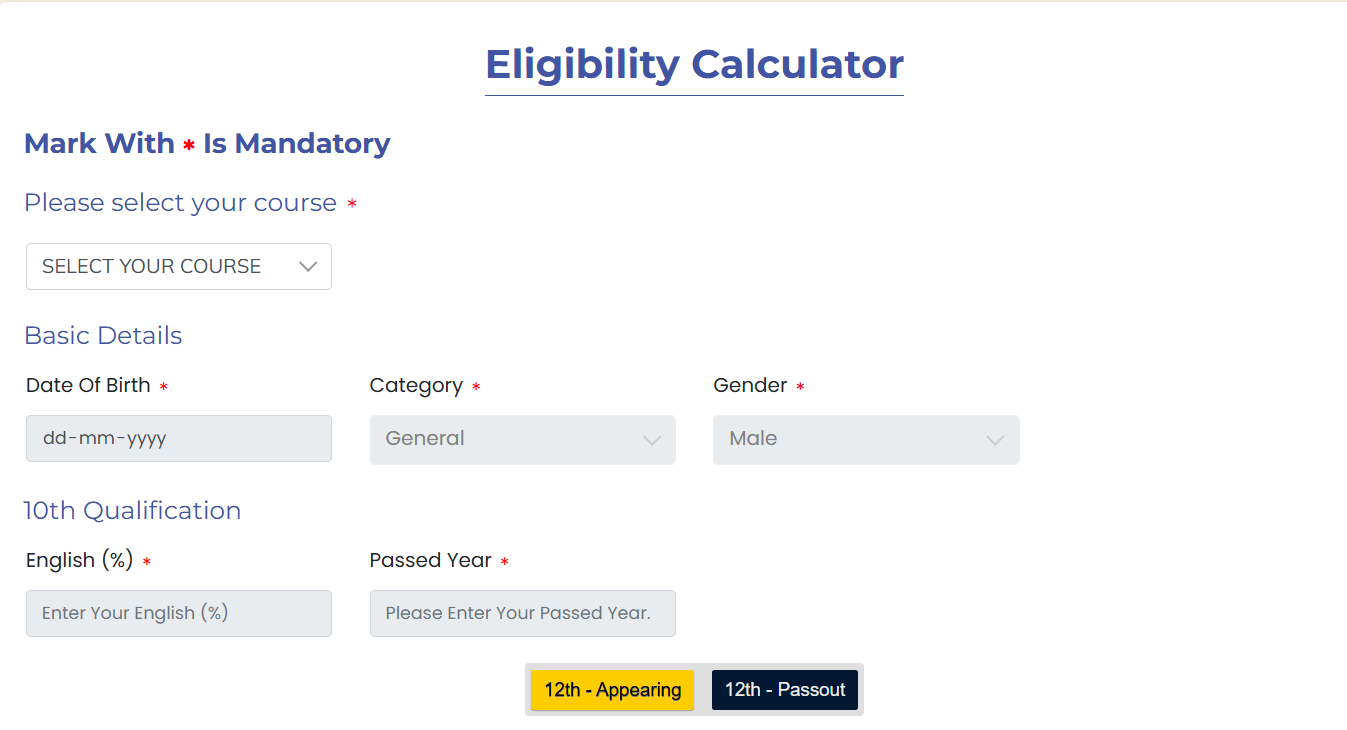
You can use the app to track the latest B.Sc. Nautical Science and Merchant Navy admission forms and check your eligibility through the eligibility calculator.

Is IMUCET Required for TMI?
Yes. For the 2026 B.Sc. Nautical Science admission, TMI states that qualifying in both IMUCET and TMISAT is mandatory. This means students preparing for TMI should not focus only on their school or board marks.
A good IMUCET performance is an important part of the admission process, while candidates also need to prepare for TMI’s own selection stages.
TMI BSc Nautical Science Admission Process
TMI’s admission process involves several stages.
1. Meet the Eligibility Requirements
First, make sure you satisfy the academic, age, and medical requirements.
2. Appear for IMUCET
Qualifying in IMUCET is mandatory for admission to the 2026 B.Sc. Nautical Science batch.
3. TMI Online Test
Candidates shortlisted based on their PCM marks and IMUCET rank have to appear for TMI’s online test.
The selection procedure includes a personality test followed by testing in areas such as physics, mathematics, and verbal and non-verbal intelligence.
4. Interview and Medical Examination
The selection process also considers the candidate’s interview performance and medical fitness according to the applicable standards.
This is why preparing only for the written examination is not enough. Communication, confidence, and general suitability for a sea-going career also matter during the selection process.

What Other Expenses Should Students Keep in Mind?
The published TMI fee structure gives a good estimate, but your total spending can be slightly different.
Some expenses that students should consider separately include:
- IMU examination fees
- Personal expenses
- Travel expenses
- Certain medical expenses
- Excursions or educational visits
- Additional value-added courses
- Other expenses charged at actual cost
TMI specifically states that the IMU examination fee is separate and that certain expenses, including excursions, visits, and medical expenses not covered by insurance, may be charged separately.
It is better to consider these expenses while planning your education budget rather than looking at tuition alone.
Can You Get an Education Loan for TMI?
For students who need financial assistance, an education loan can be an option.
TMI said its degree programs are approved by several financial institutions, including Axis Bank, HDFC Bank, Corporation Bank, and State Bank of India. The institute also points out that the applicant can go to other banks for financing.
The exact loan amount, interest rate, collateral needed, and repayment terms all depend on the bank and the programs. Students should take a close look at the terms before taking a loan, especially since the overall cost of a residential maritime degree can be significant.
Is TMI BSc Nautical Science Worth the Fee?
The answer depends on your career plan and financial situation. TMI’s B.Sc. Nautical Science program has a relatively high fee compared with several other maritime institutes. The 2026–27 estimated three-year cost is about ₹22.07 lakh.
At the same time, students are paying for a residential maritime education, including academic instruction, campus facilities, practical training, and student services.
The most important thing is to look beyond the college name and compare the complete picture: total fees, eligibility, admission process, training structure, onboard opportunities, placement support, and your own financial capacity.
If you are considering TMI, it is also a good idea to check the latest admission notice before making any payment, as fee structures and admission requirements can change between batches.
Track BSc Nautical Science Forms and Prepare with Merchant Navy Decoded
Keeping track of application dates can be difficult when different maritime colleges release their forms at different times. The Merchant Navy Decoded app can make this part easier.
The app provides access to test series that can help students practice for maritime entrance and competitive examinations.
The Crack IMUCET book is another useful preparation resource for students targeting IMU-CET. It can help you practice important concepts and questions and strengthen your preparation with focused revision.

FAQ’s (Frequently asked Questions)
No. The amount payable can differ between semesters because the admission and orientation fee is charged in the first semester, while other components can vary. For the 2026 batch, TMI lists ₹4,28,003 for the first semester and ₹3,06,670 for the second semester, including the listed IMU amount.
Yes. TMI lists a ₹20,000 interest-free caution deposit and states that it is refundable after completion of the program, subject to the applicable deduction mentioned by the institute.
TMI’s published fee structure includes student-service expenses such as meals and other residential-related services. The program is conducted as a residential maritime training program.
No. TMI specifically states that the IMU examination fee is not included in the published fee structure and has to be paid separately through the IMU portal.
The published structure divides the payment into semesters. TMI states that fees are payable at the beginning of each semester before the specified due date.
Yes. TMI states that female students receive a 50% reduction in tuition fees for each semester. This concession applies to tuition fees and does not mean that all other course expenses are reduced by 50%.
Admission to the course should not be treated as an automatic guarantee of a sea-going job. The career path also involves completing the required training, meeting medical requirements, and fulfilling the applicable certification and sea-service requirements.